Where do you live?

The title to this blog might seem a little strange to some. We might answer that question quickly by simply naming the town or city we call home. For example, I live in Pigeon Forge, Tennessee. You can name your location, and give the question no more thought.

But what if we think of the question differently? What if we, for a moment, think not about a physical location, but rather a mental, even emotional, location. For some, they would have to admit they live in the past. Others might say they live totally in the present. But how many of us could say we live in the future? Well, not IN the future, but from the perspective of the future. Let’s give this some thought for a few minutes.

First, let’s think about those who live in the past. They are haunted by failures of the past, or they bask in victories of the past. Conversations are focused on past events. Perhaps some have experienced some horrific failure in the past, and because of that they reckon themselves to be failures. They are shackled by that failure. Perhaps they even have someone in their life who won’t let them forget about that failure. They are constantly being reminded of that experience, and can’t seem to move beyond it.

Then there are those who have experienced a great loss in the past, and cannot get over it. It may have been something traumatic, like the death of a spouse, or a divorce, or a business failure, or a bankruptcy, or the waywardness of a child. Admittedly, these are daunting, and yes, even haunting events which grab us and keep us in their tenacious grips. Every day now is a constant reminder of that person, that event, that loss, that failure. And now, their lives are dictated and determined by the haunts of the past.

Second, think for a moment about those who live totally in the present. They are not shackled by the experiences of the past. As a matter of fact, for some, they have actually learned from their past failures and victories, and are better because of those experiences. However, they are locked with tunnel-vision on the events of the present moment. They allow the news to dictate how they feel. They allow the surrounding circumstances to determine their moment-to-moment attitude toward life in general. Their lives are like a virtual roller-coaster: up one moment only to be crashing down the next. Their contentment and happiness in life is dictated by things that are completely beyond their ability to control, and they swing back and forth between a state of ecstasy and a state of agony.

It seems that vast multitudes are living their lives from this perspective as we go through our present crisis. Oh, and by the way, if it were not for this present crisis it would be something else. Folks who live completely in the present moment are often swayed by whatever circumstance is present and prevalent at any given time.

Third, there are those who live life today, not shackled by events of the past, and not by circumstances of the present, but from the perspective of the future. Admittedly, this can be rather tricky. It really comes down to how you view the future.

Some can’t live life from the perspective of the future because, to them, the future is completely unknown and unknowable. And, I guess to some degree that is indeed a reality of life, at least from a temporal perspective. For example, none of us can know with certainty what will happen tomorrow. We make our plans, and place a great deal of hope that those plans will come to pass. But in reality, there is no certainty they will.

I have never met a single person who planned to contract cancer, or lose a spouse to a horrible accident, or have a devastating financial setback. We don’t plan those things, but they still happen. So, when we are talking about the future in terms of the duration of our physical life, then there are many uncertainties which cannot be known.

But that is not what I am speaking about when I refer to living life from the perspective of the future. For the believer in Jesus Christ, there is an absolute future that we can speak of with utmost confidence. By reading the Bible, we see a clear picture of the future. That future entails an absolute victory by God over all the enemies of God, and over all who oppose God.

But there’s more. The Book of Revelation tells us that there is a future in which there will be no more sickness, separation, suffering, death – those realities of the present that too often attack us and enslave us. For many, we have experienced the horror of those realities in the past, and are living life in the present in the shackles of the past. Others are experiencing life in the present by some form of sickness or separation, and we can’t see any way around, through or beyond it.

But for those who have placed their trust in Jesus Christ, we see beyond it all to a sovereign God seated upon His throne, having all things in control, and moving those things to their appointed end. Yes, there is an appointed end to this present historical period. The consummation will come as determined by God. And, according to the teaching of Scripture, the victory is ours.

Admittedly, the victory is a present reality, but will not be fully realized until that future day already appointed by God. However, knowing the victory has already been determined makes the experiences of the present, and the painful memories of the past, much more bearable.

An illustration might be helpful to explain what I mean. Those who know me know that I am an avid Dallas Cowboys fan. I have been a fan since the age of ten – fifty-eight years! I never tire of watching the Cowboys play. There are times when I am able to watch the game live. From the opening kick-off to the closing tick of the clock, I do not know what is going to happen. The outcome of the game is uncertain, and oftentimes I am literally on the edge of my seat with eager anticipation as I await the outcome.

There are other times I am not able to watch live, so I record the game in order to watch later. Sometimes, a well-meaning friend will tell me the final score before I have had opportunity to watch the game. It takes all the suspense out of the game for me. Granted, I don’t how the game will play out – I just know how it will end. I can watch stress-free because I know with certainty the end of the story.

I may not know what will happen tomorrow, or next week, or next year. But I do know the end of the story.

Let me close by encouraging everyone to strive to live life today, not shackled by failures, or even victories, of the past, and not enslaved by the crises of the present, but by focusing on the end of the story. Let’s look with longing anticipation to that day when we will see Jesus face-to-face. That is the reality of the future. Let it be the reality of this day, and every day, until He comes.
How to live our best life now

“In the beginning God created the heavens and the earth.”

Genesis 1:1

“He [Jesus] is the image of the invisible God, the firstborn over all creation. For everything was created by him, in heaven and on earth, the visible and the invisible, whether throne or dominion or rulers or authorities – all things have been created through him and for him. He is before all things, and by him all things hold together.”

Colossians 1:15-17

Let’s think for a few minutes about the astounding assertions found in the verses quoted above. Consider the following:

  • Genesis 1:1 is speaking of the beginning of creation, NOT the beginning of God. The statement actually asserts three amazing facts about God: 1) It asserts God’s eternality. God, who has existed forever, created the heavens and the earth at some point in time. However, He is not confined to time and space, but acts within time and space at His pleasure. 2) It asserts God’s creativity. God, at His discretion and for His pleasure, created everything that exists. Nothing could exist outside of God’s creative activity. 3) It asserts God’s authority over His created order. Nothing can happen within His creation other than that which has been allowed by His sovereignty.
  • Colossians 1:15-17 attests to the fact that Jesus Christ is the agent of creation. All things were created by Him and for Him. And please note carefully the phrase, “by Him all things hold together.” It is by His authority that the entirety of the created order literally continues to exist. A simple illustration may be helpful. There is a power in the universe that is referred to as gravity. On our planet, it is the power of gravity that keeps everything in place. Think about how truly amazing that is. Our planet is spinning on its axis at a speed of over 25,000 miles per hour. What keeps everything from flying off the face of this planet? Gravity. But in actuality, Paul asserts that it is Christ who holds all things together. Now, expand that to encompass the entirety of the universe. What keeps the stars and planets locked in place at a consistent distance from the sun? What enables us to determine times and seasons with absolute accuracy? What is the force that maintains perfect unity in the cosmos? According to Paul, it is Jesus.
  • Given the fact that all things were created by Him and for Him, it only stands to reason that nothing can happen outside of His control. Note that Paul asserts the visible as well as the invisible were created by Him. There are things visible to the human eye, and there are things that are hidden from the human eye. All of them were created by Him. Nothing exists but that which was created by Him. Thus, the summation would be that everything in all of the created order has a place and purpose in the eternal plans of God.

Nothing, absolutely nothing, can occur without God’s involvement.

Now, let’s get to the subject of this blog: how to live our best life now. What I am about to say is going to sound overly simplistic, albeit controversial, and yet it is what I feel we need to understand if we are to live life to the fullest, even in the face of a world-wide pandemic. Nothing, absolutely nothing, can occur without God’s involvement. A simple statement, but tremendously controversial for many since this concept of God does not fit within the parameters of their theological framework.

Let me try to explain what I mean by comparing Christianity in America to Christianity in the New Testament. It seems to me that American Christians, for the most part, have allowed themselves to buy into the health, wealth and prosperity gospel. Please understand when I use the word ‘gospel’ here I am not referring to the Gospel of Jesus Christ as presented in the New Testament, but rather the ‘gospel’ presented by many self-proclaimed theological experts who seem to believe that a good God would never allow bad things to happen to His people. Yet, just a cursory reading of the Bible will reveal God not only allows bad things to happen, but oftentimes ordains them to happen.

We often quote, or see quoted, this much memorized verse found in Second Chronicles:

“If my people, who are called by my name, shall humble themselves, pray, seek my face, and turn from their wicked ways, then I will hear from heaven, forgive their sins, and heal their land.”

2 Chronicles 7:14

What most see here is the wonderful promise of God to hear our prayers, forgive our sins, and heal our land. And indeed, what wonderful promises they are! Yet, the preceding verse is much too often completely overlooked. Read carefully these words found in Second Chronicles 7:13:

“If I shut the sky so there is no rain, or if I command the grasshopper to consume the land, or if I send pestilence on my people…”

2 Chronicles 7:13

The “I” is emphatic, being repeated three times to stress God’s personal activity. He causes the drought; He destroys the land; He sends the pestilence. Not only does God give this warning, He displays the reality of these dire consequences time after time with His chosen people throughout the Old Testament.

There are many lessons to be learned from these observations, but I would focus on only one in this blog: the present world-wide health crisis did not catch God off-guard. Remember, since He is the creator of all, has authority over all, and governs over all, then this present crisis, along with all others throughout history, fit within the parameters of His purpose and plan.

So, how are we to live in light of this Biblical teaching? We are to live our life today, and every day, in such a way as to show our trust in Him. As believers, we are to commit our lives to Him, and trust that He will bring anything and everything into our personal experiences that fit into His purpose for our lives. For some, this will mean a life of good health, comfortable prosperity, and little hardship. For others, it will mean a life of sickness, a struggle to make ends meet, and continual heartache and hardship. Still others will experience times of each throughout their lives. From the eternal perspective, such things should be of little importance. We are to entrust our lives to Him, and believe that He always has our best interest in mind.

And finally, we are to live this life with our eyes fixed on the life to come. As I have stated in previous blogs, we need to follow the advice of the Apostle Paul. Read carefully and prayerfully these words:

“So if you have been raised with Christ, seek the things above, where Christ is, seated at the right hand of God. Set your minds on things above, not on earthly things.”

Colossians 3:1-2

To live our best life now is to live it in light of eternity. When we begin doing that, we begin seeing by faith the amazing truth that God has a purpose and plan for my life, and will only allow those things in my life that will prove to be best in light of my eternal home with Him.

Are you blind? Use your blindness for His glory. Are you stricken with a chronic illness? Use that illness for His glory. Have you suffered loss: of a loved one to death; of a business to bankruptcy; of a child to waywardness; of any of a million other possibilities? Allow Him to show you how that fits within the parameters of His plan.

And finally, learn once again from Paul through his words in his second letter to the Corinthians:

“Blessed by the God and Father of our Lord Jesus Christ, the Father of mercies and the God of all comfort. He comforts us in all our affliction, so that we may be able to comfort those who are in any kind of affliction, through the comfort we ourselves receive from God. For just as the sufferings of Christ overflow to us, so also through Christ our comfort overflows. If we are afflicted, it is for your comfort and salvation. If we are comforted, it is for your comfort, which produces in you patient endurance of the same sufferings that we suffer. And our hope for you is firm, because we know that as you share in the sufferings, so you will also share in the comfort.”

2 Corinthians 1:3-7

Let’s live our best life now by entrusting our lives to Him, and trusting Him in our lives. When we have been the recipient of comfort, let us use our experience to bring comfort to others. And through it all, remember that no matter how good, or bad, this life may seem, the best life is yet to come!

the hills are alive!

Spring. Summer. Fall. Winter. Which is your personal favorite? Which of the four seasons do you look forward to the most? When asked that question, my answer has always been the same: winter! Without hesitation – without having to ponder the question, or taking a few moments to contemplate my response – winter! I have always detested the heat of summer, dreading those sweltering, humid days of misery. But I have always anticipated with great excitement the arrival of winter.

I do need to make a bit of a confession here. For much of my life, I only gave serious thought to two seasons: winter and summer. To me, spring was just a brief transitional period between winter and summer, and fall a brief transition between summer and winter. I never really gave much serious thought to these two transitional periods. But, when you consider the lunar calendar, you see that each of the four seasons are of equal duration. Each of the four is equivalent in time to each of the others. So, each of the seasons should be given equal consideration.

This really never became quite so clear to me until I had the privilege to live in the mountains of east Tennessee. Granted, I have only been here eight months, so I have not experienced the fullness of all four seasons, but I have seen enough to make a few personal observations. Arriving in late summer, I witnessed the majestic beauty of the transition between summer and fall. The mountainsides were ablaze with color. Red. Orange. Yellow. Brown. Colors bursting forth, replacing the prevalent green of summer. Such a spectacular sight.

But the brilliant colors of fall soon faded. The leaves began falling from the trees as the life-giving chlorophyll stopped flowing through the veins of the leaves. Fall slowly morphed into winter. The trees that were a few weeks earlier clothed with the greenery of foliage were now barren, seemingly lifeless. The icy fingers of winter began to entomb the trunks and branches, and it appeared that death itself had sucked the very life from the forests. The coldness and hardness of winter entombed the mountains with what appeared to be complete lifelessness. No more birds singing in the trees. No more squirrels scampering from limb to limb. An eerie, solemn, quiet fell over the mountainside. All signs of life are now gone.

The season of barrenness seemed to go on without end. Of course there were times of exquisite beauty in the midst of the barrenness. There were those mornings when we would awaken to a fresh-fallen snow. The brown, barren limbs of the trees would be covered with the bright, shimmering beauty of snow. Everything would appear so clean, so fresh, so majestic. But, alas, it would not be long before the barren limbs would once again be revealed as the snow slowly melted and disappeared.

The icy fingers of winter would slowly subside as once again the seasonal change began its transformational work. Barren limbs burst forth with the budding of new leaves. Flowering trees and shrubs dazzle the eye as reds, yellows, purples, blues, and oranges begin to glow in the warmth of the sunlight. So many different shades and hues of green blanket the mountainside with what appears to be new life springing forth from the grips of death. Birds are heard singing; squirrels are seen scampering; deer are observed grazing; signs of life are everywhere!

As the barrenness of winter gives way to the newness of spring, it is a visible, vibrant reminder that should give us renewed hope. This winter, we have not only gone through the barrenness of nature, but also through the devastation of a world-wide pandemic. We are still in the grip of this invisible enemy. The end of this battle is not yet quite in sight. However, let us hold on to the hope that this, too, will pass. The tenacious tentacles of this disease have reached the far corners of this globe we call earth, and it has not easily withdrawn its grasp.

Let us remind ourselves that this is not the first pandemic, and it will not be the last. But history proves that each of the previous pandemics have, after a period of time, subsided. It will be the same with Covid-19. How long will it last? No one knows for sure. What will be the final number of lives lost to this enemy? The record will remain unknown for a time to come.

How will we recover from the devastation left in its wake? This is one I can answer with absolute confidence: we will recover by the grace of God. It is His grace that sustains us in times of difficulty, as it does in times of prosperity. Will we ever return to “normal” after the ravages of this enemy?

I, for one, pray not. I pray that things will be vastly different. I pray that we will no longer take things for granted. Things like social gatherings, going shopping without wearing masks, shaking hands without fear of spreading or catching some invisible bacteria, walking the street without giving thought to social distancing. I pray that the Christians in our nation will no longer take for granted the freedom we have to worship corporately, and that we will no longer be intimidated about sharing our faith with our unbelieving family and friends. I pray that the coldness of this horrible season will give way to a new season of sharing our faith, showing our love, and making much of Jesus.

Seasons come and seasons go. This season will one day be behind us. We will look back with gratitude that God allowed us to survive, and we will look back with humility knowing that many didn’t. As Christians, we will – through the eyes of faith – see a sovereign God who is still enthroned, and know that, yes, all things work together for good to those who love God.

I would like to close this blog by sharing the words of one of my father’s favorite songs, Farther Along:

Farther along we’ll know more about it
Father along we’ll understand why
Cheer up my brother, live in the sunshine
We’ll understand it all by and by.

Tempted and tried we’re oft made to wonder
Why it should be thus, all the day long
While there are others, living about us
Never molested though in the wrong.

When death has come and taken our loved ones
It leaves our home so lonely and drear
And then do we wonder, why others prosper
Living so wicked year after year.
 
When we see Jesus coming in glory
When He comes down from His home in the sky
Then we shall meet Him in that bright mansion
We’ll understand it all by and by.

Farther along we’ll know more about it
Father along we’ll understand why
Cheer up my brother, live in the sunshine
We’ll understand it all by and by.


from panic to peace

Teresa and I just drove the twenty-six miles from our home in Pigeon Forge to Knoxville. The roads leading through Pigeon Forge and Sevierville are eerily quiet for this time of year in this tourist area of Tennessee. Usually, the streets are filled bumper to bumper with those coming for a visit to see the shows, visit the amusement parks, or just drive through the Great Smoky Mountain National Park.

Not this year. It is quiet. Very, very quiet. There was no traffic to contend with: no honking horns from impatient drivers ready to launch from the traffic light the millisecond it changes from red to green; no pedestrians crowding through the street crossings, blocking traffic; no window gawkers, driving slower than the 35 mile per hour speed limit allows. A veritable ghost town: businesses closed, restaurants serving only take-out or drive-through, hotels empty.

What are we to do in light of this shut-down? How are we to fill our time when we have nothing but time to fill? For those who might be a little stir-crazy, experiencing cabin fever at panic levels, let’s take a few minutes. Begin with a simple breathing exercise: breathe in, slowly, hold the breath in for a few seconds, then exhale, even more slowly. Do it again, this time with your eyes closed. Let your body relax as you do this simple breathing exercise for a couple of minutes. Purposefully allow the stress to leave your body. Silence your mind. Let the thoughts that are dominant dissipate.

Now, let your mind be filled with new thoughts. A good place to start can be found in Paul’s letter to his friends in the city of Philippi. Read these words slowly, carefully, pausing to dwell on each admonition:

“Finally, brothers and sisters, whatever is true, whatever is honorable, whatever is just, whatever is pure, whatever is lovely, whatever is commendable – if there is any moral excellence and if there is anything praiseworthy – dwell on these things.”

Philippians 4:7-8

Much too often I feel we allow our minds to be filled with the wrong kind of thoughts. Right now, in the midst of this earth-shattering pandemic, it is so easy to allow our minds to focus on fear. Paul was certainly one who could have justifiably been overcome with a sense of panic. As he penned these words, he was imprisoned, awaiting word of his impending fate. He had stated earlier in this same letter that the result of this imprisonment could be his death, and in light of that he made the startling assertion:

“For me, to live is Christ and to die is gain.”

Philippians 1:21

How could he possibly have made such a statement? Simply because Paul behaved according to his belief. Let me say that again, and please, allow the words to settle deeply in your mind and spirit: Paul behaved according to his belief. He truly believed that anything and everything he experienced in this life was unworthy of being compared with what awaited him beyond physical death. He then maintained a proper perspective on what happens here and now by focusing on things that await the believer in Jesus Christ. Listen to his words in his letter to the Colossians:

“So if you have been raised with Christ, seek the things above, where Christ is, seated at the right hand of God. Set your minds on things above, not on earthly things. For you died, and your life is hidden with Christ in God.”

Colossians 3:1-3

Focus your mind on things above! We too often have our minds fixed steadfastly on things of the earth, and we feel overwhelmed, defeated, disillusioned, distressed. But wait! If you have been raised with Christ – if you are a born again believer in the saving power of Jesus’ sacrificial death, victorious resurrection, and triumphant ascension to the right hand of His Father – then you are eternally established on the solid Rock of Ages. Please, please, I beseech you in the name of our Lord Himself, dwell on these things!

And if you do, then I can assure you of the most reassuring thought you can have in these difficult times. Again, directly from the words of the Apostle Paul:

“Don’t worry about anything, but in everything, through prayer and petition with thanksgiving, present your requests to God. And the peace of God, which surpasses all understanding, will guard your hearts and minds in Christ Jesus”

Philippians 4″6-7

To paraphrase: turn to God, trust in God, leave the results to God, and experience the peace of God. This is my prayer for everyone who reads these words. Amen!

Being certain in uncertain times

Let’s face it: these are truly uncertain times. We listen intently to those who are supposedly experts telling us what we can expect in the coming days, weeks, and months. Those expectations have changed radically over the course of time as fresh, new statistics continue to show the experts really don’t have a clue. Their speculations are much better than the average Joe or Judy on the street, but still, they are only speculations. Even the most learned, educated, and qualified to make statements concerning the present state of Covid-19 have been proven wrong on many occasions. It seems that the only real certainty is that nothing is certain.

I am writing this blog on Palm Sunday. Allow me to review the story briefly. Jesus makes His way into the city of Jerusalem. It is truly a sight to behold as He enters the city, and the crowds gather to see this Man who had captured the attention of the world. Many in the crowd began to spread their clothes on the road, while others cut branches from trees and spread them out before Jesus. It was at this point that the crowds began shouting:

“Hosanna to the Son of David! Blessed is He who comes in the name of the Lord! Hosanna in the highest heaven!”

Matthew 21:9

This event was the moment in time that changed everything. It started a series of events that would take place over the next several days which would ultimately lead to Jesus’ betrayal, arrest, trial, false accusation, and crucifixion. What appeared on Palm Sunday to be the crowning moment His disciples had long awaited and anticipated, became the beginning of the end – at least for their dreams and expectations.

The disciples watched, day after day, as Jesus confronted different groups concerning their false hopes which were based on false beliefs. He systematically destroyed the arguments of the chief priest, the elders, the Pharisees, the Sadducees, and the Herodians. In doing this, His enemies became more antagonistic toward Him than ever before. They were even more determined to destroy Jesus before He could do more damage to their false religious system.

Over the next few days, it became obvious that what seemed so certain on Palm Sunday was becoming more uncertain by the moment. The crowds began to dwindle down in size. Those who had just a few days before shouted accolades to Jesus were now quiet, subdued, uncertain of the events unfolding before them. Their voices now silenced, they waited anxiously to see what might come out of these events.

Finally, after watching the tide turn against Jesus, those who had once shouted accolades now shouted accusation. As Jesus was tried and pronounced guilty of trumped-up charges, they were caught up in the frenzy of the moment. As the religious leaders cried out, “Crucify Him, crucify Him!” the chant grew louder and louder as the multitude was swayed in riotous agreement with them.

The disciples watched in horror as Jesus was sentenced to die. The certainty they had felt a few days earlier is shattered, and the uncertainty of the moment sank in. Jesus, their leader, their Savior, their Lord, was now dead. Can you imagine what they might have felt in those next three days?

Darkness. Despair. Hopelessness. Loss. Meaninglessness. Grief. Sadness. A sense of horror. A feeling of anguish. A rush of guilt. A flood of memories. An avalanche of abandonment. The crush of defeat. The reality of death. The confusion. The perplexity. The misunderstanding. The displaced faith. ALL IS LOST!
Can you imagine how they tried to reason through the events of the last hours. How they had been so deceived to follow Jesus, with all His outlandish claims, and His lofty teachings? How they had forsaken all to follow Him? And now THIS! THIS?
The crush of Saturday is settling in. The reality of His death is taking hold. The loss of everything has taken all hope, and left them reeling in the aftermath.

This is exactly how many seem to be feeling in this time of uncertainty. The disciples isolated themselves behind closed doors, just as many are doing now. Some out of obedience to the stay-at-home instructions from our local and federal government, but some out of sheer fear because of the uncertainty of what might be happen if we should step outside of our homes.

But let’s remember: the darkness and despair were dispelled on Sunday! For the disciples, cowered behind closed, bolted doors, the news of the resurrection shattered the shackles of darkness and gave them a renewed sense of hope. The uncertainty caused by Jesus’ death is now replaced with the certainty of His power over death, hell and the grave. Those who had been paralyzed by the reality of His death are now set free by the power of His resurrection.

As I stated in my last blog, our only hope is Jesus Christ. The disciples learned that on resurrection Sunday. For those of us who have entrusted our lives to Jesus Christ as our only means of salvation, we now have the same Spirit living within us as did the disciples. Their fear was replaced with boldness. The cloud of uncertainty was replaced with the light of certainty: certainty that they were now victors, regardless of what life might throw their way.

At the present time we are voluntarily practicing safe-distancing, and staying at home except for doing the things outside the home that are necessary. But please know: this, too, will pass. Look above the cloud of uncertainty to the throne of the One who gives certainty. Let’s keep our eyes on Him – the Author and Finisher of our faith.

And above all, remember this: SUNDAY’S COMING!

Where is god?

If you had the power to do something – alleviate pain, cure cancer, stop famine, control the weather, etc. – would you do it? That really sounds like an absurd question, but in reality that is exactly where we are, isn’t it? We’re wondering why God doesn’t intervene, why He doesn’t step in and destroy this virus that is literally shutting down the world. And because of that, the age-old questions surface once again: if God is all-powerful yet does not intervene, then He cannot be good; or if He is good and really cares about His human creation yet does not intervene, then He cannot be all-powerful. We begin to convince ourselves that these are the only two options.

But, could there be other options available? Could there be another explanation which embraces both the omnipotence of God, as well as the goodness of God? There has to be, or we are left to believe that God is an uncaring, unloving, less-than-powerful Being that is not worthy of our worship.

We might try to resolve this paradox by using the analogy of the relationship between a parent and child. As a loving, caring parent, we truly want the best for our children. We don’t want them to suffer in any way. We try our best to protect them from harm. We strive to teach them to embrace proper values which will guide them in their decision making as they grow into adulthood. However, no matter how much effort we put into protecting them, they still suffer. They contract childhood diseases, suffer bumps and bruises, reject the values we work so hard to instill in their young, impressionable minds, and suffer the consequences of poor decisions.

Then, sadly, some parents reach the conclusion that to continue to protect their children from their self-imposed path of destruction will do more harm than to allow them to suffer the consequences of their actions. So, as painful as it is for the parent to watch, they allow their child to go down a path that will cause great personal pain and anguish.

I realize the analogy breaks down because we cannot compare the powers of a finite, fallen human being with the infinite God of the universe, but please follow along with me for a few more minutes. As we turn to the words of Scripture seeking answers, we may be surprised at the things we learn. We learn, for example, from the story of Adam and Eve, that God set parameters for them which would ensure their well-being if they would remain within those parameters. Could God have created them in such a way that they could not choose to step outside of those God-ordained parameters? Of course He could! Yet that would mean human beings were nothing more than automatons, robots, pre-wired with no ability to choose anything outside of the God-ordained parameters.

However, God did not create a race of robots; He created a race of humans to whom He gave the right to make real choices, even those in direct defiance of His pre-ordained parameters. Consequences would be suffered for those decisions, but Adam and Eve had the freedom to choose. And, by choosing as they did, they suffered dire consequences, and also unleashed on the world the curse for their recklessness.

A huge consequence of their insubordination was the unleashing of God’s curse on the earth. The original family was banished from the pristine, perfect paradise of Eden, and forbidden to ever return. The earth would no longer produce as it had before the fall, but would only produce through the toil and sweat of the human family.

As we follow along the developing story of humanity as presented in Scripture, we see the unfolding of the catastrophic results of the fall. Diseases of all kind, natural disasters of titanic proportions, hatred among different people groups, wars, famine, earthquakes, epidemics, and yes, even pandemics. The human family was cursed.

Dotted throughout history we read of all manner of hardships and heartaches caused by the curse. The present Covid-19 pandemic is another of many that have come and gone before. In just the past forty years we have witnessed the following: HIV/Aids, 1981- present; Swine flu, 2009-10; SARS, 2002-03; Ebola, 2014-16; MERS, 2015-present; Covid-19, 2019-present. These are all examples of the affects of the curse God pronounced on the earth.

We must surmise from this the truth that all such pandemics are the result of man’s freedom to choose defiance of the will of God over submission to the will of God. The results of the fall of man continue to escalate, and will actually proliferate as time goes on.

As I stated in an earlier blog: chances are that you will not die from Covid-19. However, something will eventually take your life. The Bible gives ample teaching concerning this subject, and even for those who do not believe the Bible, history proves the point. So, the matter of being prepared for death is of utmost importance. God has graciously provided a means through which individuals may be prepared for death: Jesus Christ. And for anyone who might think God cannot possibly bring something good out of a pandemic, please remember this: He provided salvation through the most horrific event in all of human history. When Jesus Christ died on the cross, the devil was defeated, the curse was dealt a death blow, and the avenue from death into life was opened wide for everyone who would accept God’s offer of grace.

In the meantime, the effects of the curse still rage. Sickness, disease, death, war, famine, earthquakes, etc. etc. will continue to intensify until the very moment Jesus Christ personally intervenes in history once again. The results of the curse should be a reminder to each of us that life is short, time is limited, and history as we know it will end. Please, I beg of you, make sure you are prepared for eternity by turning to, and trusting in, the Lord and Savior, Jesus Christ. He is our ONLY hope.

coping with covid-19

Life has certainly changed in the past few weeks, wouldn’t you agree? I live in a tourist town in the beautiful mountains of east Tennessee. At this time of year, the town of Pigeon Forge, along with neighboring Gatlinburg and Sevierville, is filled with tourists who have come for a visit. There are many things in this area which draw huge crowds, especially between March and December.

We have shows to entertain, amusement parks to thrill, outlet malls to lure us in, attractions galore to spend our time, and, of course the biggest draw of all, the Smoky Mountains to dazzle our eyes, minds, and spirits. At this time of year the roads are usually at a stand-still due to stop-and-go traffic.

But not this year. This year the shows are closed, the amusement parks lie eerily quiet and empty, the outlet malls are void of human traffic, the attractions are shut down, and even the scenic mountain roads are without sight-seers. Yes, life has changed radically, and we are now hearing the talking heads on TV harping on and on about the “new norm”.

Exactly what does that mean? What is the “new norm”? Right now, it consists of social distancing, “stay-at-home” restrictions, essential personnel only enforcement in the work place, daily instructions on how to remain safe and virus-free as we go about our daily routines. It means unemployment for millions as non-essential jobs are cut and workers are laid off. It means doctor’s visits are restricted to emergency status only, and only emergency surgeries are being performed. And these examples are only a small part of the “new norm”.

My wife and I have been voluntarily isolated for the past two weeks. We only go out in public when it is absolutely necessary. The only places we have been where we were in close proximity to others are the grocery store and the pharmacy. When we have gone to these places, we have tried to maintain a safe distance from others. When we see our neighbors out and about, we speak, but from a distance. We will even carry on a lengthy conversation with them, but still, at a safe distance.

So, how do we cope with this new norm? What can we do to maintain our sanity in a world that is vastly different than anything we have ever experienced? I would like to use the remainder of this blog to offer a few suggestions.

First, I would suggest that we use this time to grow deeper in our fellowship with God. Too often, in our hectic paced lives, we allow certain things to be forced out of our daily routine. Far too often, the first thing to go is our quiet time with God. There are many reasons we might allow this to happen. Other things are viewed as more important. As a matter of fact, we have other commitments that are thought to be of much more importance than my personal, private time of devotion and fellowship with God. And, after all, no one is looking over my shoulder, keeping tabs on my quiet times of prayer, Bible study, and devotion. But please understand: nothing is more important than our daily time of personal worship. Use this down time to reinvest in your personal spiritual development by spending quality time every day in His presence.

Second, I would suggest we use this time of isolation to get reacquainted with our family. Let’s face it, in our fast-paced society we spend very little time – real, quality time – with our family. We’re too busy with all the demands of life, and when we finally come home, we’re too tired to enjoy time with the family. Too often we allow life to distract us from what is really important. So, this time of self-imposed isolation could actually provide a fresh, new start for many. Play games together, put puzzles together, take walks together, read books together, cook out together. If there are children in the home, let them participate in coming up with daily plans of action.

Third, get out of the house, together. Go for a walk as a family. Go to a secluded picnic area where you can fly a kite, throw a football, take a hike, or simply enjoy being outside, together. Start a new family tradition. Go to a near-by lake or pond, and wet a hook together. Start a hobby that everyone can enjoy. Play together and plan together. Use this time to get better acquainted with one another.

Fourth, I would suggest that parents get to know their children better. Have a family discussion several times a week. Let this time be guided by a specific topic. As a family, sit down and compile a list of topics to be discussed. Don’t let one family member dictate all topics: rather, take turns coming up with suggested topics. Write the topics down as they are suggested, and then discuss them in that order. This ensures that everyone’s topic(s) are seen as equally important and valid.

Fifth, have a movie night. Again, let each family member have a voice in the movie selection. You might want to once again compile a list, allowing each family member to suggest movies to be watched. Then, once again, view them in the order they were suggested. After watching the movie, have a family discussion about the movie. What was your favorite part? Are there any life lessons to be learned? How might we apply those lessons to our lives? What can we do in the next week to implement those lessons?

These are just a few very simple suggestions to help us cope with this “new norm”. You probably have many more ideas that could be added to what I have shared. That’s great! My suggestions are just the beginning of what could be an exciting new journey for each of us. Let’s not allow our present cultural crisis to cause us to become bitter, but rather, better. Enjoy life. Get reacquainted with loved ones. Begin new traditions. Make tons of new memories.

And finally, remember: life is precious. Don’t take it for granted. Don’t put off the things that we can do right now to be the best we can be in the worst of times. God bless you and yours as we walk this new norm together.

Let's get real

Before I get into the heart of this blog, let me preface my remarks by stating clearly I know that some will probably take offense at my topic. I assure you, I am not trying to be morbid, focusing on a sensitive topic that may seem a little over the top. My purpose, stated at the outset, is based on a conversation my wife and I had as we continue to see the proliferation of this pandemic which has rocked the world. We had a heart-to-heart discussion on something I feel we all need to get real about: our impending death.

I realize that some will tune me out and read no further. But I sincerely ask that you hear me out, and hold your judgments until the end of this blog. I assure you my intent is that we simply think seriously about some matters of grave (no pun intended) concern. I am going to approach this topic from three different perspectives: the eternal, the temporal, and the daily.

First, let’s get real about the eternal. Man was created to live forever. The life we live now is temporary. The Bible makes it clear that death is a reality for each of us. Read carefully the following words:

“It is appointed unto all men once to die, but after this the judgment.”

Hebrews 9:27

Please allow those sobering words to sink in for a few moments. The gravity of this statement cannot be overemphasized. We will all, each and every one of us, die. Physical death is an absolute reality that none can escape. And the verse further states that after death – yes, there is something after this life – we will be judged. The eternal realm is real, and we will all dwell forever in that realm.

This life offers each individual the opportunity to choose where they will live after they suffer physical death. The Bible makes it clear that there are but two possibilities: heaven, or hell. Even though the world offers many different roads which lead into heaven, the Bible offers only one: Jesus Christ. Once again, the words of Jesus Himself teach clearly this phenomenal truth:

” I am the way, the truth and the life. No one comes to the Father except through Me.”

John 14:6

As we face this world-wide pandemic, it would be wise for each of us to make sure we have acted upon this truth. Let’s get real, the vast majority of us will survive Covid-19, but 100% of us will die. Our physical existence will not last forever in this present reality. We will pass through the valley of death. It will be then that we will face judgment. For the believer in Jesus Christ, it will be at the Judgement Seat of Christ, where we will be judged according to our works for the Lord since the time of our salvation. For the unbeliever, it will be at the Great White Throne Judgment of God, where they will be judged for their rejection of Jesus Christ. The former will then celebrate the Wedding Supper of the Lamb, while the latter will be cast into the lake of fire, where they will remain in torment eternally.

Please take a moment and make sure that your name is inscribed in the Lamb’s book of life. Make sure that you are saved by the blood of the Lamb. Once you have that issue settled, then come what may in this life, you know by faith that whatever we suffer in this present life is not worthy to be compared with the glory set before us in the presence of our Lord and Savior.

Second, let’s get real about the temporal. This life is temporary. Some will live relatively healthy lives, and die peacefully in their sleep at a ripe old age. Others will not fare quite so well. Some will have chronic diseases which cause suffering at different levels of intensity. Still others will contract illnesses that will cause intense suffering until it ultimately takes their life. It matters not which category we personally fall into, the fact remains that this life is temporary. James puts it rather bluntly in his epistle:

“Yet you do not know what tomorrow will bring – what your life will be! For you are like vapor that appears for a little while, then vanishes.”

James 4:14

Have you ever watched the vapor rising from a boiling pot of water? Have you noticed how quickly it vanishes as it rises into the air above the pot? Here one moment; gone the next. According to James, that is analogous of our lives. We are here but for a brief blip on the time-line of life. It doesn’t matter if we live to be 20, 30, 60, 90, or even 100. The fact remains that in comparison to eternity it is just a blip, a blink of the eye, a vapor, here one moment and gone the next.

What are we to do as we live out this brief blip of time? For the believer, the answer is extremely simple. Jesus spoke of this on many occasions, using many word pictures to illustrate the point. Just a few will suffice to reveal Jesus’ mandate for each of His followers:

“You are the salt of the earth…. You are the light of the world.”

Matthew 5:13, 14

“Let your light shine before others, so that they may see your good works and give glory to your Father in heaven.”

Matthew 5:16

Don’t store up for yourselves treasures on earth, where moth and rust destroy and where thieves break in and steal. But store up for yourselves treasures in heaven, where neither moth nor rust destroys, and where thieves don’t break in and steal. For where your treasure is, there your heart will be also.”

Matthew 6:19-21

These words show clearly where our focus should be, even while we live in this temporal body made of clay. We are to be focused on the eternal realm, while enjoying this temporary blip in time. We are to live this life for the glory of God, being salt and light in a world filled with decay and darkness.

Jesus’ mandate is then expounded upon by the Apostle Paul. Read carefully his words found in his letter to the Ephesians:

“Therefore I, the prisoner in the Lord, urge you to live worthy of the calling you have received, with all humility and gentleness, with patience, bearing with one another in love, making every effort to keep the unity of the Spirit through the bond of peace.”

Ephesians 4:1-3

We should live our lives in humility, gentleness, patience and love. We are to be shining examples of Jesus’ grace, compassion and mercy in the face of anything and everything this life throws our way.

Finally, let’s get real about the daily. Hear the words of the psalmist, which hopefully will provide the impetus necessary to maintain a proper outlook as we go about our daily lives:

“This is the day the Lord has made; let us rejoice and be glad in it.”

Psalm 118:24

Please understand the emphasis on the word “this”. The psalmist was obviously speaking of the specific day during which he made the statement. The truth is that “this” day would point to every day. I can say today, “this day,” and then say tomorrow, “this day,” and the next, and the next, ad infinitum. Every day is “this day”. And what am I to do this day? Rejoice and be glad! It matters not what this day may hold – it is a day to rejoice and be glad. And tomorrow? The same. And every day, the same.

Our lives as believers are to bring glory to God, every day that we live and breathe. During these days of witnessing the world literally shut down due to the fear of the corona virus, we are to maintain a life focused on what is real, lasting, and eternal. The night will pass; the sun will shine again on a new day; each day will present challenges of its own; and through it all, God is on His throne and cannot be moved.

So, let’s get real. Let’s make up our minds to live each day in light of the fact that each day we live only adds up to a temporal existence which will one day end for each of us, but will then usher us into the eternal realm. For those who are born again believers, bought with the precious blood of the Lamb, that will be the eternal blessing of God’s presence. For those who have chosen to reject God’s gracious offer of salvation, that will be eternal suffering in the lake of fire, forever separated from God’s goodness and grace.

I hope and pray that your response can be the same as the Apostle Paul. I leave you this week with his words:

“For me, to live is Christ and to die is gain.”

Philippians 1:21

faith: the antidote to fear

Fear: a present day reality like none other anyone living at this time has ever seen. I realize there have been historical times and events that have caused a state of fear, even verging on panic, to grip the minds and hearts of man, but none in the lifetime of most living today. As the world faces this pandemic, perhaps it would be a good time to remind ourselves of a few important truths.

First, it would be a good time to remember this life is not all there is. Eternity looms before each of us. Our decisions here and now will determine our eternal future. Actually, one decision will determine each individual’s eternal destiny. We would do well to be reminded of the words of Jesus Christ:

“I am the way, the truth, and the life. No one comes to the Father except through me.”

John 14:6

The statement is simple, yet profound. There are many religions in the world, all teaching some process by which man might attain heaven. All others are based on the teachings of some religious leader who lived, died, and was buried. The Bible teaches that Jesus, too, lived, died and was buried. The one major difference is that those other religious leaders are still in their graves: bodies decaying, corroding, corrupting. Jesus, however, rose from the dead after three days and nights in the grave. His resurrection establishes His authority to make the statement quoted above. No other religious leader has/had the authority to save anyone, because they could not even save themselves. So, let’s remember that we have a living Savior: Jesus Christ. Putting our trust in Him minimizes our fear of anything and everything we might encounter as we go through life.

Second, let’s give our attention to another comforting promise of Jesus:

“Don’t let your hearts be troubled. Believe in God; believe in also in Me. In My Father’s house are many rooms; if not, I would have told you. I am going away to prepare a place for you. If I go away and prepare a place for you, I will come again and take you to myself, so that where I am you may be also.”

John 14:1-3

It is vital that we remember the context in which Jesus made this statement. He is only hours away from His betrayal, arrest, trials, false accusations, beating, and crucifixion. If anyone ever had the right to have a troubled heart, it would have been Jesus as He faced His impending suffering and death. Instead, He endeavors to prepare His disciples for the coming hours, days, weeks, months and years. How could they carry on after His death? Their hopes were in Him, and their belief that He would establish an earthly kingdom of which they would all have prominent roles. They did not yet understand Jesus’ teachings of the kingdom of God. It would not be until after Jesus’ death, burial, and resurrection that they would understand the spiritual implications of His promise.

The lesson we must learn from this episode in Jesus’ life is that in light of His own impending suffering and death, He spoke a message of hope. Hope that would be a reality for His disciples then, and to His disciples now.

Third, we need to consider the gravity of another statement Jesus made:

“I have told you these things so that in me you may have peace. You will have suffering in this world. Be courageous! I have conquered the world.”

John 16:33

Again, the context is the night before Jesus’ betrayal and crucifixion. He was preparing His followers for the reality of suffering in this life. Our hope – our one and only hope – is found in His words: I have conquered the world. Do you see the contrast in His words? To the onlooking world, it did not appear as if Jesus had conquered the world, but was rather conquered by the world. Jesus was exhibiting His own belief that His impending suffering and death would settle the victory for those who would believe, even in the midst of personal times of suffering.

Suffering is part of the human experience. Very few live life free from any form of suffering. I realize that Jesus was speaking primarily of the suffering His followers would experience at the hands of an unbelieving world. However, it goes far beyond that to encompass any and all forms of suffering, which would, of course, include world-wide pandemics. Based on this, we should maintain a level of faith in the sovereign God of the universe, realizing that the Coronavirus did not catch God off-guard.

Fifth, and finally, let’s direct our attention to one final statement from Jesus:

“Don’t be afraid of what you are about to suffer. Look, the devil is about to throw some of you into prison to test you, and you will suffer affliction for ten days. Be faithful to the point of death, and I will give you the crown of life.”

Revelation 2:10

Let’s listen carefully to these most powerful words from our Lord. We will suffer. The suffering at times will be intense, even to the point that we feel we cannot survive. But let’s learn a couple of important truths from these words. First, Jesus does not lessen the reality of suffering, but rather tells us to expect it. However, we are to also understand that the suffering is limited. We learn that from the reference to ten days – a limited period of time. Second, Jesus admonishes to remain faithful, even to the point of death. We are not to allow circumstances, no matter how gloom, to cause us to lose faith. We are to look above the trial, through the eyes of faith, and see that God is on His throne, and cannot be moved. He is steadfast and true. And finally, Jesus will give us the crown of life. No matter what we suffer in this life, even to the point of our physical death, we are safe in the arms of our Lord.

In conclusion let me say that I am in no way encouraging anyone to live recklessly. We are given common sense to care for ourselves. But, we are called us to be light in the midst of darkness. The world needs to see people of faith living life courageously, shining the light of His love and grace into that penetrating darkness. But always remember: darkness cannot overcome the light. So, let’s shine on for His glory, and remember:

“[because] everyone who has been born of God conquers the world. This is the victory that has conquered the world: our faith.”

1 John 5:4

Faith in the midst of fear

“But God has not given us a spirit of fear, but one of power, love and sound judgment.”

2 Timothy 1:7

I suppose it would be safe to say that we all have fears. All my life I have dealt with the fear of heights. I remember as a young child, I would not slide down a sliding board because my fear kept me from climbing the ladder. It was a paralyzing fear, a debilitating fear, that would not allow me to participate in so many activities.

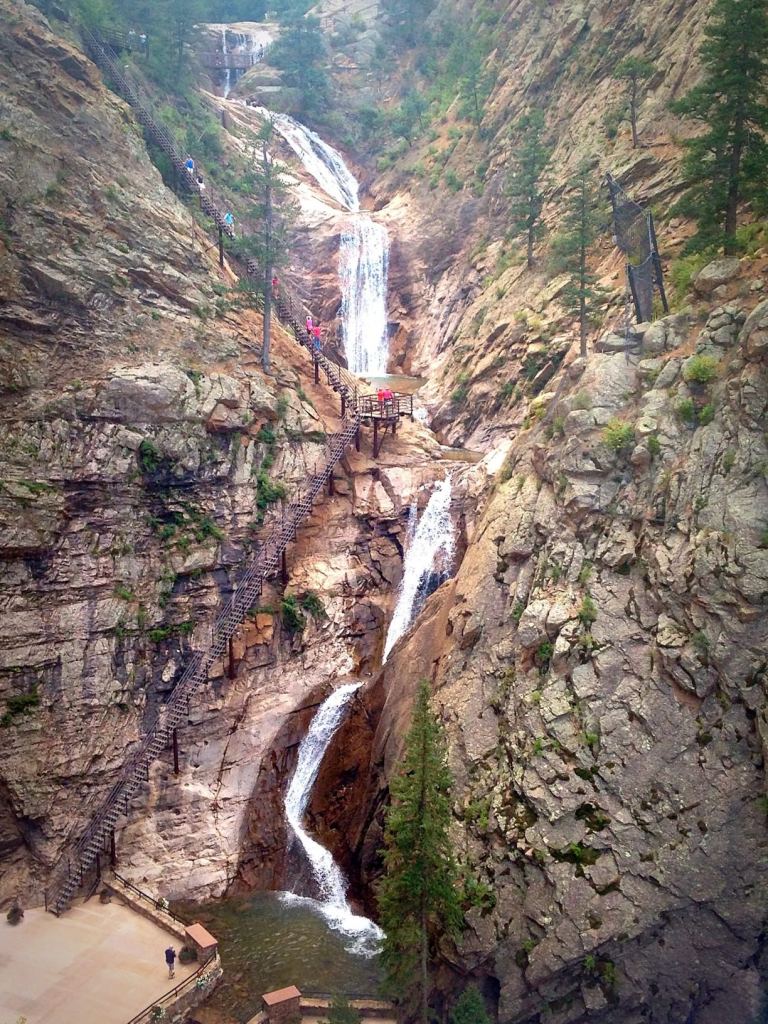
A few years ago Teresa and I were in Colorado Springs, Colorado. We were looking for some sight-seeing spots in the beautiful Rocky Mountains, and were told of Seven Falls, a majestic waterfall which cascaded down a mountainside twisting and turning through seven twists and turns. A staircase had been built which would take one from the bottom of the falls all the way to the top. Upon beginning the trek up that staircase, I did fine for a while, but when we were about half way to the top, I completely froze. I suppose it was because I glanced down, and realized how high we had climbed.

Paralyzed! Stricken with fear. Unable to move. Gripping the handrail so tightly it probably still has my fingerprints engraved in the metal. Thankfully, Teresa, with love and patience, was finally able to talk me into going back down. I have no idea how long it took me to walk back down that staircase. I was shaking with fear, almost to the point of total helplessness. Carefully, cautiously, slowly, painstakingly, I was able to make it down.

I know what fear is, and how it can affect us if we give ourselves over to its paralyzing power. And, we are all prone to experience episodes of fear. There is one graphic example of the power of fear in Scripture that illustrates just how quickly and easily we can become tangled in the tentacles of fear. In Matthew’s Gospel, we have the story of Jesus walking on the water. As He approached the boat in which the disciples were, we have the following conversation between Peter and Jesus:

“Lord, if it’s you,” Peter answered him, “command me to come to you on the water.” He [Jesus] said, “Come.” And climbing out of the boat, Peter started walking on the water and came toward Jesus. But when he saw the strength of the wind, he was afraid, and beginning to sink he cried out, “Lord, save me!”

Matthew 14:28-30

A very familiar story, to be sure. Before I speak about Peter’s fear, let’s make sure we take a moment to note a couple of extremely important elements in the story. First, Peter is the only one who got out of the boat! His faith enabled him to overcome the fear of stepping off the solid footing of the boat, onto the surface of the stormy sea. He actually walked on the water. Second, after allowing himself to be overcome with fear as he gazed around at the crashing waves, he walked back to the boat with Jesus. The other disciples were obviously stricken by their fear of trying to walk on the surface of the water. So, let’s be sure to give Peter credit for his act of faith.

But, between his act of walking out toward Jesus, and then his act of walking back to the boat with Jesus, is that small matter of his epic failure. The text tells us that he took his eyes off Jesus and began gazing at the stormy sea. He immediately began to sink, allowing his fear to momentarily rob him of his faith. Jesus, acting immediately at Peter’s cry for help, reached out, took Peter by the hand, and said what had to be a spiritual gut-punch to Peter:

“You of little faith, why did you doubt?”

Matthew 14:31

Please note that Jesus did not reprimand Peter for no faith, but for his little faith. His faith had enabled him to get out of the boat, but was not enough to enable him to go the distance. Many, perhaps most of us can relate to that. We have, by faith, gotten out of the boat – whatever that boat might have been – and have walked by our faith for a while. But then, storms of different shapes and sizes and intensities took our eyes off Jesus, and we began to sink into the miry pit of little faith. We found the circumstances to be intimidating, daunting, and seemingly insurmountable. Instead of keeping our eyes on Jesus, we allowed those circumstances to rob us of our faith.

I would like to simply encourage each of us to keep our eyes on Jesus. He is the author and finisher of our faith. Life is filled with eventualities that will quickly rob us of our faith, put us into a state of panic and fear, and lock us into a self-imposed prison of despair.

I’ll close this week with a quote from Vance Havner: “It’s hard to be optimistic when you have a misty optic.” When our eyes of faith have become clouded with the cares of this world – whether it be a personal problem or a world-wide pandemic – we become overwhelmed with eyes of fear. That fear will paralyze us if we allow it to take control. We can be optimistic, remembering that God is sovereignly on the throne, and all things are working according to His plan. For the believer in Jesus Christ, the cares of this world are not worthy of being compared to the glory set before us. In the temporariness of the trials and troubles of this life, let’s remember: the best is yet to come! Even so, come Lord Jesus!