
Tag Archives: life

Person silhouetted on rocky mountain with glowing light and star-filled night sky

Understanding the Seasons of Life

Seasons: Winter, Spring, Summer, Fall. They come and go with amazing accuracy. Our calendars mark the first day of each season. For those who live in parts of the world where the seasons have abrupt and distinct changes in weather patterns, temperatures, precipitation, length of days, there is no uncertainty about what season of the year it is.

The changing of the seasons in nature reminds us of the different seasons which are clearly delineated in the human life cycle.

The changing of the seasons in nature reminds us of the different seasons which are clearly delineated in the human life cycle. From the moment of conception to the moment of death, all humans go through these seasons. Of course, we realize that some experience physical death before they go through all the seasons, but for those who live into the golden years, the reality of the changing of the seasons of life is clearly observed.

Human life progresses through what are often referred to as distinct stages, going from the prenatal stage to old age. Each stage is marked by changes that are unique to the particular stage one happens to be in. You can find the different stages of human development in many sources, with some variations according to the source to which you refer, but for the sake of this blog we will think of the stages as: 1. Prenatal stage; 2. Infancy; 3. Toddler; 4. Early childhood; 5. Middle childhood; 6. Adolescence; 7. Early adulthood; 8. Middle adulthood; and 9. Late adulthood.

Each of these seasons presents its unique physical, cognitive and emotional changes and challenges. There are abnormalities that can affect one’s experiencing these changes and challenges, but for the vast majority of humans, the seasons of life are distinct and easily recognizable. (Please note: even those born with some birth defects that interfere with the normal progression of human development are fearfully and wonderfully made, and should be treated with the utmost respect, nurture, and care.)

The first five stages (according to the list provided above) are crucial for the mental, physical, and emotional development of the child. Mental abilities, motor skills, social adaptability, among other things will be developed during these formative years. The family is the focal point during these stages of human development. Social skills will be learned and progressively developed and honed; motor skills will be fine-tuned; social ability and agility will be enhanced as relations begin to be established outside the family unit.

The sixth stage, adolescence, then begins to call everything learned to this point into question. Whereas up to this pivotal point in human development most has been centered around family, now interest begins to expand to other things. It is during this stage that the individual will begin to seek independence by exploring and dreaming about what their future would look like. There is usually a great deal of emotional maturation that takes place during these years, with a sincere desire to understand one’s own identity and where they “fit in” with the immensity of possibilities before them.

And then comes the years of early, middle, and late adulthood. Each of these has its own set of distinct characteristics, but for the sake of time and space we will consider them together. There is a focus on career choice, family formation, parenting, life achievements, and eventually a period of reflection on life already lived.

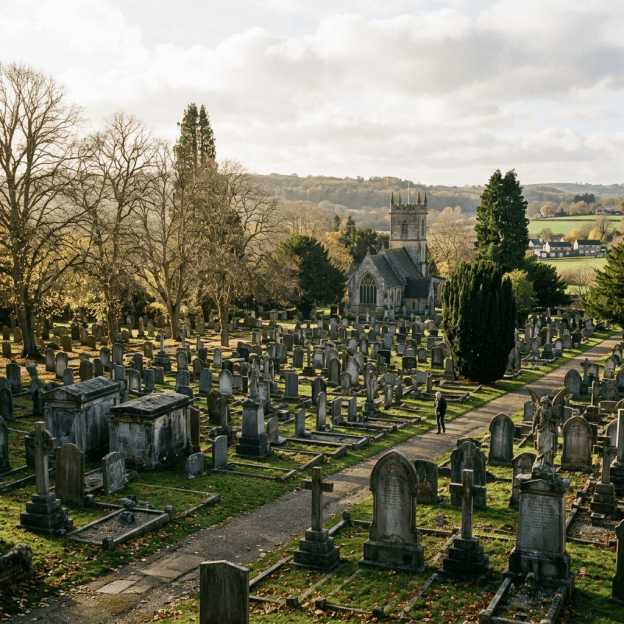
It is at this point that we begin to take more seriously the brevity of life. We realize, as we enter the stage of middle to late adulthood, that we have now lived longer than we have left to live. Every time we stand beside a freshly dug grave, watching while yet another family member is lowered into the ground, we are reminded of the extreme brevity of life. These things cause us to begin taking more seriously our own mortality.

I, personally, have now passed through eight of the nine stages of human development. Late adulthood (according to some) begins at the age of 65. Based on that, I am already nine years into late adulthood.

So, looking back over the 74 years I have now lived, what have I learned? If I could summarize it all, bringing it all down to one thing, what would I say is the most important thing I have learned in all those years? It would simply be the same conclusion King Solomon reached after striving to find the meaning of life, and the meaning to his life in particular.

“Remember now your Creator in the days of your youth.”

As he has spent a great deal of time and expended much energy and resources striving to find what is really important in life, Solomon reaches this conclusion: “Remember now your Creator in the days of your youth.”

Earlier in the book of Ecclesiastes, Solomon had reached a most amazing discovery. He said, “He [God] has put eternity in their hearts” – speaking of the fact that God had placed the reality of eternity and the desire to be prepared for our personal entrance into the eternal realm in our heart. But then, it was not until much later that he finally reached the conclusion that he had wasted a lot of time, spent great amounts of money, delving into everything imaginable, looking for the meaning of life.

“He [God] has put eternity in their hearts”

And again, his conclusion was, “Remember now your Creator in the days of your youth.”

Which season of life have you reached? Have you come to the same conclusion as Solomon? Have you realized that God created you with the realization that this life is not all there is? That something far greater and grander than anything this life offers is yet before us? And that His Son, Jesus Christ has gone to prepare an eternal home for those who trust Him as their personal Lord and Savior?

Life is a vapor – here one moment and gone the next. It is here, in this brief amount of time we have in this physical existence, that we have opportunity to be prepared for eternity. Are you ready?

Embracing Life’s Delays: Finding Meaning in the Unexpected

For years I lived with the mentality that to be thirty minutes early was to be late. I always tried to give myself plenty of time to get to my destination, and this was for a variety of reasons. For one thing, I tried to give myself extra time just in case I ran into an unexpected delay – construction work that had traffic backed up, an accident that had the road blocked, a flat tire that I would have to change, etc. Giving myself extra time meant that I would reach my destination early. And early, in my estimation, is always better than late.

I have met a few people who thought fashionably late was a way to showcase themselves. They wanted to make an entrance after most of the other attendees had already arrived so that they would be seen. I suppose they had the desire to be the showcase participants at the event. I, on the other hand, have always thought it was a bit discourteous to the event planners as well as the other attendees. Maybe I’m a bit old-fashioned, but, as I have already stated, early is always better than late.

But maybe there are times when being late would be appropriate. Have you ever given thought to the fact that for two vehicles to be involved in an accident, they have to be in exactly the same spot at the same time. Precisely, down to the millisecond. Five seconds earlier or later would have made all the difference in the world.

As is obvious from my opening remarks, I am a stickler for being on time. But, there have been times when I was delayed in my departure time for some reason. Just the other day, for example, I had driven about two miles from home when I realized that I had forgotten my hearing aids. So, I had to take time to go back those two miles so that I would be able to hear any conversations I might engage in that day. That four-mile round trip delay probably caused me to lose ten to fifteen minutes. Not long, but long enough to have missed something that might have happened had I been “on time”.

Of course, it is sheer speculation to think about what could have happened had I been able to continue with no detour/delay, but it is reason to pause and think. How many times could God have orchestrated a delay in our scheduled plans for the day because He knew that if we were on time by our plans we would have encountered some sort of problem.

I try to maintain this mindset when I find myself stuck in traffic due to circumstances far beyond my control. I try to remind myself that this delay could very well be saving me from some problems that would have occurred had I been able to keep going without the delay.

Maybe I’m overthinking this whole thing, or maybe I’ve just had too much caffeine and my mind is kicked into overdrive. Or maybe, just maybe, there is a bit of truth in this assessment. So, just in the likelihood that there is, let’s try to not allow ourselves to get overly frustrated over those detours and delays that interrupt our schedule. Use them to thank God for the scenery you may have missed had you been able to keep moving. Or, better yet, use those delays as a time to spend time conversing with God about the details of your day. Either way, you will find that your frustrations will not seem so drastic as they might seem otherwise.

Blessings!