
Tag Archives: nature

Listening to God’s Creation: A Call to Worship

The world is firmly established; it cannot be shaken. Let the heavens be glad and the earth rejoice, and let them say among the nations, “The Lord is King!” Let the sea and everything in it resound; let the fields and all that is in them exult. Then the trees of the forest will shout for joy before the Lord, for He is coming to judge the earth. 1 Chronicles 16:30-33

It is obvious from these words that King David is overwhelmed by the presence and power of the Lord. This outburst of praise is filled with words of adoration to the Lord, and he is calling all of creation to worship and exalt Him. The occasion for this psalm of thanksgiving is the day the Ark of God is being carried to the city of Jerusalem after having been captured by the Philistines. There was great rejoicing in the city as the Ark, which represented the presence of God, was returned to its rightful place.

I find it very interesting that David calls for creation to be involved in this day of celebration. He refers to the heavens, the earth, the sea and everything in it, the fields, and the trees of the forest, saying they will shout for joy before the Lord. What a powerful way to describe how nature can lead one to worship and praise.

I remember one such occasion from many years ago. I was a student at Fruitland Bible Institute, located in Hendersonville, NC. Teresa and I were living at Chimney Rock while I attended the school. We had heard that there would be an Easter Sunrise Service on Chimney Rock and decided to attend. I remember that it was a cool, clear day as we made our way up the winding road to the parking lot far above the streets below.

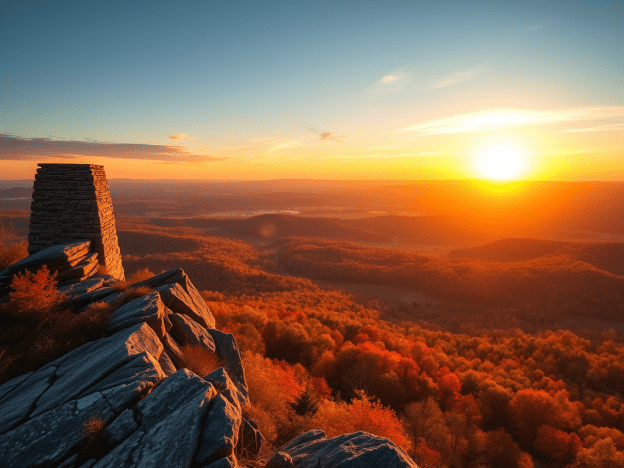
I must admit that I don’t remember anything that was said during the time of worship. It wasn’t that I did not listen – I just didn’t hear. Why? Because the words of the preacher were being drowned out by the beauty of God’s creation. The glorious beauty of the panoramic view from the top of Chimney Rock was screaming so loudly that I could “hear” nothing else.

The pastor had completed his message, and he asked everyone to bow for the closing prayer. As much as I hated to close my eyes, I did as the pastor asked. He prayed a beautiful prayer of adoration, praise, and worship of our mighty God, and our Savior, Jesus Christ, whose resurrection we were celebrating on that Easter morning.

When he said “Amen” at the conclusion of his prayer, I opened my eyes to see one of the most beautiful sights I have ever seen: the sun was just rising on the horizon. I was mesmerized. Tears of joy began to flow down my cheeks as I once again was enraptured by the “sounds” of creation, speaking much more loudly than the words of the pastor, even though he was speaking through an array of speakers which had been assembled for the occasion. Oh, it wasn’t a voice that you could hear – that is, unless you were listening.

I’m sure I wasn’t the only one listening to creation’s message of praise that beautiful Easter morning atop Chimney Rock, but as far as I was concerned, I was the only one there. I was hypnotized by the message I was hearing. There have been other times when I experienced the message of creation, but none have ever topped the one that day long ago.

Is it important to realize the truth that nature gives testimony to the power and presence of God? The Apostle Paul certainly thought it was. Listen to the words he penned in his letter to the Romans:

For since the creation of the world His invisible attributes are clearly seen, being understood by the things that are made, even His eternal power and Godhead, so that they are without excuse. Romans 1:20

Nature is a testimony to God’s invisible attributes! Paul even asserts that no one will be able to stand before God and say that he did not know God existed, because the creation itself bears testimony to His existence and power. The constant, consistent testimony of God’s creation is enough to convince anyone who will “listen” to its voice that there is a Creator, a Designer, a powerful, personal “cause” behind what exists.

Are you listening? Don’t get so caught up in the “voices” of the world that it causes you to miss out on the “voice” of God’s majestic creation. Let it, instead, bring you ever closer to God as you see His presence in the things He has made and given to us to enjoy.

Blessings!
From Spectator to Participant: A Call to Action

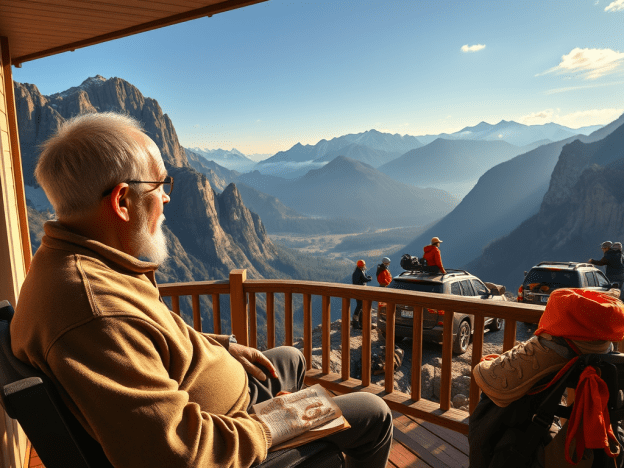
There was an elderly man who lived in a valley surrounded by towering mountain peaks. One peak in particular attracted the attention of avid, serious-minded mountain climbers because of its sheer, treacherous rock cliffs, and the challenge of attempting to climb such a daunting and dangerous mountain. There were many who would climb some of the other cliffs surrounding this valley, but only the very best – those who were experts at mountain climbing – and the very bravest – those with the courage to risk all the dangers of such a climb – would ever consider such an arduous, dangerous, climb.

One morning, as the old gentleman took his Bible, his cup of coffee, and his morning newspaper out onto the large, wrap-around porch of his mountain home, his attention came to focus on a convoy of five large SUV’s making their way into the valley bottom. He knew from past experiences that this is where those preparing to make a climb would usually park their vehicles. As they found a clearing large enough for them to begin unloading their climbing gear, he knew that he would not be able to see clearly enough without assistance, so he quickly made his way back into the house to get his binoculars and, if the need arose for something more powerful, his telescope. He didn’t want to miss even a moment of the action.

He had never seen so much climbing gear being taken out of those vehicles! It took a couple of hours just to unload. Then, the tedious task of preparing everything for their climb began. Ropes, hooks, rappelling gear, sleeping bags, food, water, first aid supplies, tents were carefully inspected and then placed into their backpacks. As the morning ended and the afternoon hours began it became obvious that this would be the most dangerous climb ever. It took them the entire day to just get ready for the climb. He realized that he would need plenty of rest to keep up, so as soon as darkness covered the valley he went to bed for a good night’s rest. He wanted to be refreshed for the activities of tomorrow.

With coffee and Bible, binoculars and telescope in hand, he made his way to the porch to watch today’s movements. The climbing group was already moving toward the base of the cliff – the most dangerous of all! He had never seen anyone make this climb successfully. It caused him to be even more intent to watch every move.

And he watched. And watched. And watched. Five straight days of watching. It was such an arduous, dangerous climb that they were taking every precaution. Two of the five days it seemed they were making almost no progress at all due to the extreme caution they had to take in the placing of their rappelling hooks. And each evening they had to find a ledge wide enough to safely set up their single-person tents.

But finally, about mid-afternoon on the fifth day, they made it to the top. It had been a most dangerous climb, but they were now of the very few who could share they had made it.

The old gentleman was so excited! He quickly made his way into the house, grabbed his truck keys, and took off toward town. He was going to tell everyone the news! He went straight to the old general store where he and his friends would meet almost every day for a coke and conversation. He had not even made it to the table where his colleagues had gathered before he began shouting, “We made it, we made it. All the way to the top, we made it!”

They sat there incredulous – wondering what in the world their old friend was talking about. When they finally got him to settle down, catch his breath, and gather his thoughts, they asked, “Made what, exactly?” He then began to recount the activities of the past few days: how they had painstakingly made their way, day after day, until they reached the top.

He finally finished telling his tale. When he stopped talking long enough for one of his friends to speak, the friend asked a simple, one word question: “We?” Then all of the old gentlemen there on that day began to chuckle, then their chuckles turned to laughter, and their laughter finally evolved into loud, boisterous guffawing, with two of them almost going into convulsions. When they were able to quit laughing, catch their breath, and speak, one asked again, “We? What did you do? You sat on your porch, in your nice, comfortable reading chair, watching. You did nothing! You really don’t qualify to use the word “we”, do you?

The old gentleman hung his head. His excitement quickly abated, and he was left in a state of embarrassment. They were right – he had done nothing – but watch. Watch while others did all the work; while others climbed the cliff; while others took all the dangers in hand; while others put themselves in grave danger just to be there; while others did everything, and he did – well, nothing, he did nothing.

Could we make a personal, spiritual application of this story? Perhaps you have heard someone in a church family, while talking about things going on in the church use the inclusive “We” in the description. “We did this” and “we did that”, when in reality they did nothing. They sat while others did everything.

I hope that this does not describe anyone who might read this story, but if it does, and you are the person, then why not make a change. Get involved. Be a part. Use your talents and your spiritual gifts by being a part of what God is doing. Don’t sit by as a spectator, but be a participant in the action.

The local church is like a football game; twenty-two people on the field, badly in need of rest, and forty thousand in the stands, badly in need of exercise.

Someone once described the local church as a football game; twenty-two people on the field, badly in need of rest, and forty thousand in the stands, badly in need of exercise. Where are you? And what do you need to do about it?