
The Consequences of Turning Away from God

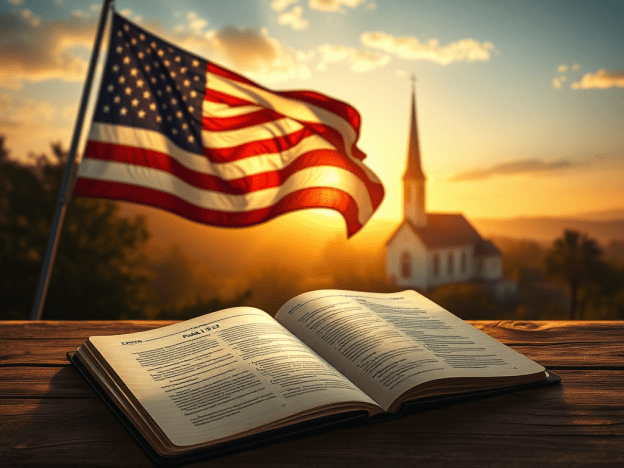
Blessed is the nation whose God is the Lord, the nation He has chosen for His own inheritance. Psalm 33:12

The nation the psalmist is referring to in this verse is the nation of Israel. God chose one man, Abram (to whom God later gave the name Abraham), and promised him that He would make of him a great nation through which all nations of the earth would be blessed or cursed, depending upon their relationship with His chosen nation. So, first and foremost let’s remember that what the psalmist says in this psalm is directed at them.

However, there are certainly applications that can be made to other nations based upon the sentiment stated in this verse. Nations that accept God’s teachings and strive to honor Him in their decision-making process will be blessed, while others will suffer the consequences of His judgment. Based upon that premise I would like to make a few observations about the United States of America, a country that has been richly blessed by the Lord in countless ways, but one which is now suffering from mass divisiveness, unrest, hatred, violence, and unprecedented rejection of the very vision that drove our founding fathers to establish this nation on God’s Word with the desire that it be, not simply a religious nation, but a decisively Christian nation.

Our generation is seeing the destructive erosion of the foundation our founders laid, and upon which they envisioned a nation whose God is the Lord would be established. A quick review of decisions that have dramatically altered that initial vision will show clearly that we are not what our founders gave sacrificially to accomplish, and to pass off to future generations.

The beginning of this downward spiral began with what some viewed as a necessary change that was demanded by our nation’s changing constituency. In 1962-63, the decision was made by our Supreme Court that prayer and state sanctioned Bible reading and prayer would be removed from our public schools. I remember vividly as a ten year old student witnessing the change that took place. Instead of opening the school day with a student led devotion and prayer, we only heard the call to repeat the pledge of allegiance to our flag, and then a litany of announcements. No Bible, no prayer.

A nation that once had no problem identifying as a Christian nation (although there has never been a time in which all citizens of this country identified personally as Christian), the population began to change. Adherents of other religions began flocking to our nation. But things began to change. No longer did they come to assimilate into the life of our nation to seek a better life than that which they were leaving behind, but they began demanding that the citizens of our nation accommodate their religious beliefs and practices.

The next major step away from life based on Christian principles was in 1973, when abortion was legalized in our nation. Now, 53 years removed from that alarming and destructive decision, over 65,000,000 babies have been aborted in the United States. That is a mind-staggering figure, would you not agree? For a nation that had now turned its back on the principles of God’s Word, it was not a big jump to embrace a culture of death. If you don’t believe that life begins at conception, and that every life is one created in the very image of God, then the taking of a life loses its significance.

Two decades later, in 1992, abortion was reaffirmed. This time it elevated personal autonomy over moral tradition. “My body, my choice” became the mantra. I could give hearty assent to that statement if it was based on fact. However, it is not the body of the expectant mother that is being killed, it is the body of an innocent baby, being formed in that mother’s womb. Her choice had already been made. It was the choice to engage in sexual activity that resulted in her pregnancy. Now, having made that choice, the body growing inside her body is not her body, but the body of a human being who deserves to live.

Move with me to the year 2003, the year that sexual morality was redefined. In the landmark Supreme Court case, Lawrence v. Texas, the court’s decision invalidated nation-wide state laws which criminalized sodomy between consenting adults. This decision set a precedent for future legal challenges to same-sex marriage.

That decision in 2003 played a huge role in leading to another major shift in American life. In 2015 same-sex marriage was legalized which ultimately redefined marriage. Traditionally, marriage had been viewed as one man married to one woman. With the legalization of same-sex marriage, the institution of marriage itself was completely redefined. As a matter of fact, many would say that the institution of marriage became totally unnecessary. Once again, we see a major shift from life lived under the direction of God’s Word to life lived by personal choice and preference.

The final major cultural shift I will mention took place in 2020. It was then that personal preference of self-identification was elevated over biology. God created man and woman – male and female. There are no other possibilities. It matters not how loudly and adamantly one might demand to be identified as something than what they are, his/her anatomy tells the tale. A male is a male, and a female is a female.

Teresa and I had an in-home health assessment the other day, and one of the questions was: “Do you identify yourself as male, female, or other.” To me, that is an absolutely ludicrous question. I was born “baby boy Stewart,” and nothing has changed to make me anything else. You are who you are by the design of Almighty God. Period!

It is not difficult to see how quickly things can deteriorate when a nation changes its allegiance. Our nation’s allegiance was for 200 years settled on the truths of Scripture. It has only taken one generation to move us far away from our founder’s dreams and intents.

So, what can we do? First and foremost, pray. Pray for a return to Scripture. Pray for a return to Biblical guidance to be the norm for our political leaders. Pray for spiritual renewal and revival to sweep our land. Pray for preachers to preach the truth in love. Pray for strength and courage to let our voices be heard in the public arena, by whatever means possible as good representatives of our Lord. And be involved. Those who oppose Christian values and principles are shouting their demands loudly and clearly. Christians must do the same.

Blessed is the nation whose God is the Lord. Let’s do all within our power to turn our nation back to Him.

Blessings!

From Spectator to Participant: A Call to Action

There was an elderly man who lived in a valley surrounded by towering mountain peaks. One peak in particular attracted the attention of avid, serious-minded mountain climbers because of its sheer, treacherous rock cliffs, and the challenge of attempting to climb such a daunting and dangerous mountain. There were many who would climb some of the other cliffs surrounding this valley, but only the very best – those who were experts at mountain climbing – and the very bravest – those with the courage to risk all the dangers of such a climb – would ever consider such an arduous, dangerous, climb.

One morning, as the old gentleman took his Bible, his cup of coffee, and his morning newspaper out onto the large, wrap-around porch of his mountain home, his attention came to focus on a convoy of five large SUV’s making their way into the valley bottom. He knew from past experiences that this is where those preparing to make a climb would usually park their vehicles. As they found a clearing large enough for them to begin unloading their climbing gear, he knew that he would not be able to see clearly enough without assistance, so he quickly made his way back into the house to get his binoculars and, if the need arose for something more powerful, his telescope. He didn’t want to miss even a moment of the action.

He had never seen so much climbing gear being taken out of those vehicles! It took a couple of hours just to unload. Then, the tedious task of preparing everything for their climb began. Ropes, hooks, rappelling gear, sleeping bags, food, water, first aid supplies, tents were carefully inspected and then placed into their backpacks. As the morning ended and the afternoon hours began it became obvious that this would be the most dangerous climb ever. It took them the entire day to just get ready for the climb. He realized that he would need plenty of rest to keep up, so as soon as darkness covered the valley he went to bed for a good night’s rest. He wanted to be refreshed for the activities of tomorrow.

With coffee and Bible, binoculars and telescope in hand, he made his way to the porch to watch today’s movements. The climbing group was already moving toward the base of the cliff – the most dangerous of all! He had never seen anyone make this climb successfully. It caused him to be even more intent to watch every move.

And he watched. And watched. And watched. Five straight days of watching. It was such an arduous, dangerous climb that they were taking every precaution. Two of the five days it seemed they were making almost no progress at all due to the extreme caution they had to take in the placing of their rappelling hooks. And each evening they had to find a ledge wide enough to safely set up their single-person tents.

But finally, about mid-afternoon on the fifth day, they made it to the top. It had been a most dangerous climb, but they were now of the very few who could share they had made it.

The old gentleman was so excited! He quickly made his way into the house, grabbed his truck keys, and took off toward town. He was going to tell everyone the news! He went straight to the old general store where he and his friends would meet almost every day for a coke and conversation. He had not even made it to the table where his colleagues had gathered before he began shouting, “We made it, we made it. All the way to the top, we made it!”

They sat there incredulous – wondering what in the world their old friend was talking about. When they finally got him to settle down, catch his breath, and gather his thoughts, they asked, “Made what, exactly?” He then began to recount the activities of the past few days: how they had painstakingly made their way, day after day, until they reached the top.

He finally finished telling his tale. When he stopped talking long enough for one of his friends to speak, the friend asked a simple, one word question: “We?” Then all of the old gentlemen there on that day began to chuckle, then their chuckles turned to laughter, and their laughter finally evolved into loud, boisterous guffawing, with two of them almost going into convulsions. When they were able to quit laughing, catch their breath, and speak, one asked again, “We? What did you do? You sat on your porch, in your nice, comfortable reading chair, watching. You did nothing! You really don’t qualify to use the word “we”, do you?

The old gentleman hung his head. His excitement quickly abated, and he was left in a state of embarrassment. They were right – he had done nothing – but watch. Watch while others did all the work; while others climbed the cliff; while others took all the dangers in hand; while others put themselves in grave danger just to be there; while others did everything, and he did – well, nothing, he did nothing.

Could we make a personal, spiritual application of this story? Perhaps you have heard someone in a church family, while talking about things going on in the church use the inclusive “We” in the description. “We did this” and “we did that”, when in reality they did nothing. They sat while others did everything.

I hope that this does not describe anyone who might read this story, but if it does, and you are the person, then why not make a change. Get involved. Be a part. Use your talents and your spiritual gifts by being a part of what God is doing. Don’t sit by as a spectator, but be a participant in the action.

The local church is like a football game; twenty-two people on the field, badly in need of rest, and forty thousand in the stands, badly in need of exercise.

Someone once described the local church as a football game; twenty-two people on the field, badly in need of rest, and forty thousand in the stands, badly in need of exercise. Where are you? And what do you need to do about it?

The Fear of Being Lost: A Spiritual Perspective

Have you ever been lost? I mean, really lost? I’m not speaking about getting separated from your family or friends in Walmart, or the mall. I realize that those instances can cause a great deal of anxiety, but they are not the kind of lostness I am talking about. I am talking about terrifying, heart-pounding, panic-attack inducing, life-threatening, lostness.

Lost – a real, excruciating time in which you feel hopeless and helpless. A lostness during which you are separated from your party. A lostness in which every turn looks the same. A lostness with no signs of anything familiar. A lostness during which you feel as if you are going around in circles, making no progress toward any point of reference that looks like it might provide a way of escape.

You call out as you walk, listening for a response, but silence is the only response you get. You are all alone. Darkness begins to set in. The light of day is quickly ebbing away. The shadows grow longer as the sun sets over the horizon. You become more anxious with each passing minute. You begin to strain to see through the deepening darkness.

You begin to question yourself, especially your sense of direction. The darkness is becoming so “thick” you can almost feel it. You begin to call out with more intensity, your voice becoming raspy due to your screaming so loud and so long. But the only response you hear is, again, silence.

Total darkness has now set in. Clouds cover any light from the moon and stars that might have otherwise given some assistance to your night vision. The only sounds you hear as those of an owl in a nearby tree, and what you think might be the howling of a coyote in the distance.

You finally resolve yourself to the fact that you are totally, completely, hopelessly and helplessly, lost. You find a fallen tree where you sit down to rest, and think. Think. Think. Think. As you think you remember a steep hill you had descended just a short distance away. You think that maybe, just maybe, if you could climb to a higher point you might be able to see any source of light farther down in the valley. So, you begin to walk again, this time going back in what you think is the direction from which you descended. You climb for a while and finally come into a clearing where you can see over the tops of the trees. As you turn your gaze slowly in a circular motion, your eyes catch the sight of a light in the far-off distance. It’s not much light, but enough to give you a sensation of hope.

But that hope quickly abates as you think about the fact that as soon as you begin your descent in the direction of the light, your line of sight will soon be blocked by the towering trees. But after more thought, you realize that that one, solitary source of light is the only hope you have. So, as best you can, you start off in the direction of the light.

As you walk through the darkness, there are moments in which you are eerily engulfed in the thick fingers of night. There are moments when you can’t see the light, and you fear that you might get turned around and lose your way. But then, thankfully, you come into a clearing just large enough for you to once again see the light and get your bearings. Each time you lose sight of the light, and then find it again it is just a little larger and brighter.

Hope begins to well up in your heart as you think that you might be on the verge of finding your way out of your dilemma. Once again you move into an area in which your view of the light is cut off. Darkness once again engulfs you. Once again, a feeling of momentary hopelessness begins to take control of your mind.

But this time it is short-lived, because you come to another clearing, and you find yourself standing just feet away from the light. You almost scream with delight as you realize that you are just a few steps away from what you hope will be a source of help. As you walk to the door and begin to knock, you are met by an aged couple who welcome you in, take you immediately to the wood-burning stove, give you a cup of soothing hot chocolate, and listen caringly as you share the details of your harrowing experience.

That would certainly be a harrowing experience to go through, for sure. But, needless to say, that story comes nowhere near the reality of the horror of being spiritually lost, separated from God, with no hope beyond the grave. This was a story about being lost for a few hours. Being lost forever, for eternity, in the horrors of hell is so much worse. Words cannot begin to describe the torment one will experience if they were to die without Christ.

They would be ushered immediately in a Christless, Godless, existence. Jesus described it as a place where the worm never dies, and the fire is never quenched. It is a place of eternal torment for those who choose to reject God’s offer of salvation which is provided through the death, burial, resurrection and ascension of Jesus Christ.

Have you accepted this most amazing offer? Have you confessed to God that you are a sinner in need of salvation, and acknowledged that you believe Jesus is the only means of supplying the saving grace you desperately need? If not, please, please, don’t wait until it is eternally too late. Accept His gift now, while there is still time. Don’t let the darkness of sin keep you out of God’s provision of eternity with Him.

Blessings!

Are You Ready for His Coming? Key Questions for Believers

If you have children, no matter their age now, you probably remember a time when you were bombarded with the question, “Are we there yet?” It may have been on a family vacation, a trip that would require several hours of driving, or it may have been a short drive across town. The distance really didn’t seem to matter to that child sitting impatiently in the back seat, with no concept of the relation between time and distance. To them, it seemed as if you had begun a journey that had no end. This resulted in the infamous question, “Are we there yet?” over, and over, and over, ad nauseam.

However, it is not just children who become impatient when they are expecting the reaching of their destination. As adults, we, too, can become very impatient when we are looking forward to something that seems to be coming so very slowly. This could be an event we have been looking forward to, a vacation we have long anticipated, a new move to a new location, the beginning of a new job, or a multitude of other things. We know it is coming – we even know when it is coming – and yet we grow very impatient in the interim period.

“Is He here yet?”

For believers in the Lord Jesus Christ, we stand the danger of falling prey to the possibility of growing very impatient when we think about His coming for His bride, the church. Instead of asking, “Are we there yet?” we might begin asking, “Is He here yet?” He has promised that He is coming and has told us to always be on the lookout for that momentous event. Then, to underscore the importance of this coming event He told stories to warn us of growing impatient to the point that we let our guard down and become lax in our looking for His arrival.

“Where is the promise of His coming?”

The apostle Peter had something of vital importance to say concerning this matter. He said, “Scoffers will come in the last days, walking according to their own lusts, and saying, ‘Where is the promise of His coming? For since the fathers fell asleep, all things continue as they were from the beginning of creation.” Jesus warned that there would be those who would grow weary in awaiting the Master’s return and would become extremely negligent in their commitments to Him. They would not be prepared for His coming.

“The Lord is not slack concerning His promise.”

For anyone who takes Biblical prophecy seriously, it seems obvious beyond any doubt that the time of His coming is drawing close at hand. Peter went on to remind us of an essential truth for believers to remember. He said, “But beloved, do not forget this one thing, that with the Lord on day is as a thousand years, and a thousand years as one day. The Lord is not slack concerning His promise, as some count slackness, but is longsuffering toward us, not willing that any should perish but that all should come to repentance.”

The fact of the matter is that the Lord could come at any moment. There is no Biblical prophecy that must be fulfilled before He comes. The next prophecy that will be fulfilled is His coming for His bride. This is the next big event on God’s Biblical timetable.

So, the question is: Are you ready?” It is a Biblical fact that He is coming. So it is vitally, even eternally, important that we ask ourselves this question: “Am I ready for His coming?” Are you prepared to meet Him? Have you been born again? Do you know that you have a home awaiting you in heaven because you have trusted Him as your personal Lord and Savior?

And then, if you can answer “Yes” to that question, then can you honestly say that you are ready for His coming? Are you serving Him, living for Him, walking in fellowship with Him? If not, why not today prepare yourself for His arrival by committing to live for Him and for His glory. Then, you can rest assured that He will not catch you off guard when He arrives.

Blessings!

Avoiding Presumptive Planning: Insights from James 4

Come now, you who say, “Today or tomorrow we will go to such and such a city, spend a year there, buy and sell, and make a profit”; whereas you do not know what will happen tomorrow. For what is your life? It is even a vapor that appears for a little time and then vanishes away. Instead you ought to say, “If the Lord wills, we shall live and do this or that.” But now you boast in your arrogance. All such boasting is evil.

James 4:13-16

As we say good-bye to one year and prepare to welcome the beginning of another, we are often encouraged to take time to reflect on the year ending and make plans for the new year. How do we go about doing that? What are the criteria we use to evaluate the past, and determine plans for the future?

From my personal observations and experiences, I have come to the conclusion that often we engage in the fallacy of presumptive reasoning. James, in the passage quoted above, warns against this faulty way of thinking. He refers to someone who is obviously making plans for the immediate future, saying that he is about to head out on a journey that will take him to a certain destination where he will engage in business transactions that will result in a profit. There are several obvious fallacies in his line of reasoning.

First, he is assuming that he will be physically able to make this projected journey. Granted, this is something we all do – we make plans as if we are going to be around to see the fulfillment of those plans. We don’t usually make it a habit of sitting around with morbid thoughts of our physical death. We don’t allow ourselves to be consumed with thoughts of our own mortality. Those thoughts are for the most part foreign to us. We don’t think about our own death until we are forced to do so. This particular individual is certainly engaging in the art of presumption in relation to his own longetivity.

His second assumption is that he will be able to arrive at his destination. Again, when we plan to take a journey, we do the same thing. Just a couple weeks ago we set out for a trip to Texas to attend our grandson’s graduation from college. When we made our plans for the trip, we assumed that we would arrive safely at our son’s home in Mesquite, TX. which, thankfully, we did.

A third assumption was made that once he had arrived in his city of choice he would then engage in a successful business venture that would result in profit for him. I’m not sure of the state of economic volatility in the city to which he planned to travel, and I’m not sure of how much research he had put into this particular venture, but it sounds as if he was counting his chickens before they hatched, as the old saying goes. He was presuming that his venture would prove to be a success producing a windfall for him.

Still another matter of presumptive reasoning is that he planned to stay in this city for a year. Again, he is making assumptions based on very limited information and scanty knowledge of what the future would hold. The entirety of his reasoning in making these decisions was based on his presuming certain things would happen just the way he planned.

Now, is it wrong to make plans? Is it wrong for us, at the end of 2025, to make plans for 2026? No. But there is a right way, and there is a wrong way to make plans. James is giving us an example of the fallacy of presumptive reasoning, but he doesn’t leave his readers in the dark as to how to engage in proper reasoning. And it is extremely simple. He says that we should always practice the act of submitting our plans to God. We are to actively seek the Lord’s will in every decision we make.

As we prepared to leave for our first day of travel on our trip to Texas, the very first thing we did was seek the Lord’s will. We prayed for safety on the highway. At the end of the day’s traveling, we thanked God for safety. We did this every day. We actively sought the Lord’s will in everything as we drove the 2000+ miles of this journey.

It is not a difficult thing to do. As a matter of fact, it is one of the easiest things to do, but it is also one of the most important things. We should never engage in the fallacy of presumptive reasoning but rather give ourselves over to the Lord’s will in everything.

This is a fundamental part of the life of a sincere follower of Jesus Christ. It acknowledges that God’s will is far better than my own, and that I will actively seek His will in all my decision making. This is not a passive acceptance of waiting for God, but an active participation of obedience and submission as we actively pursue His will in our lives.

So, let’s look forward to the coming days of 2026 with anticipation and excitement, seeking His will in all things, not acting presumptively, but with the desire to follow His will as He makes it known through His Word and the leadership of the Holy Spirit.

Rediscovering the True Meaning of Thanksgiving

Make a joyful shout to the Lord, all you lands! Serve the Lord with gladness; come before His presence with singing. Know that the Lord, He is God; it is He who has made us, and not we ourselves; we are His people and the sheep of His pasture. Enter His gates with thanksgiving, and into His courts with praise. Be thankful to Him and bless His name. For the Lord is good; His mercy is everlasting, and His truth endures to all generations. Psalm 100

Today is Thanksgiving Day in the United States. A day which is set aside for the specific purpose of giving thanks to God for His bounty and blessing. But, alas, it seems to me that the real purpose has gotten lost in the busyness, the shift away from the original intent of the day, and the establishment of family traditions that do not include any emphasis on giving God thanks.

I guess some would argue that Thanksgiving Day is simply a national holiday established in 1863 when Abraham Lincoln proclaimed a national Thanksgiving Day to be held each November. There were many underlying factors that led to this proclamation, but the primary one for Lincoln was the Civil War (quite a misnomer, don’t you think – there’s really nothing civil about war!).

However, the idea of a day of thanksgiving goes back much further than that. Thanksgiving celebrations are known to have been held as far back as 1621, when the Plymouth colonists (we know them as the Pilgrims) and the Wampanoag Indians shared a feast of thanksgiving.

This spirit of thanksgiving could be thought of in some ways as part of our American heritage. But, as I stated earlier, it seems to me that the original intent and meaning behind the day has been lost, or at least altered.

I am sure that there will be many gatherings of family and friends today that will include no time for giving thanks to God for His blessings. As a matter of fact, I’m quite sure that many will have no idea that this was the intent of the idea of a national day of Thanksgiving.

Thanksgiving celebrations should certainly include time for family and friends, for feasting and football, for sharing and remembering, for enjoying time with those we see very seldom and those we see regularly. Enjoy the day, and the time we have. Cherish the moments, build memories, share stories of the past, share hopes for the future. Yes, by all means enjoy the day!

But in the midst of all that – whatever ‘that’ means to you and yours – make sure that God has His rightful place. Not as one who is given a simple ‘thank you’ in our prayer over the feast, but One who is center of all we do as we gather to give Him thanks.

Our Thanksgiving is going to look quite different this year. There are empty chairs around the table. But there is One who is always there – let’s give HIM His rightful place.

Happy Thanksgiving!

Understanding Accidents and Divine Will

This morning (Sunday), I am lying in bed when I should be up getting ready for church. I should be going over my sermon notes, praying, and preparing myself spiritually for the grand opportunity of sharing God’s word. But, alas, I have no voice. It is better than it was yesterday. At least today I can whisper a little bit louder.

My sister was involved in an automobile crash recently. She was not injured seriously, even though her car didn’t make it. We are so thankful for the fact that she didn’t suffer any serious, life-threatening injuries as she certainly could have.

Her accident, and my laryngitis, made me start thinking – seriously thinking. Knowing my sister the way I do (or at least the way I think I do), she probably prayed before heading out on the highway that day. I know that she prays for me and my family every day because she tells me regularly that she does. She passes everything before God in prayer. I imagine that on that day, she prayed asking God for safety as she traveled. And I have been praying all week about my sermon for today, and for our Thanksgiving celebration tonight.

So, here’s the big question: Did God hear our prayer? Please, don’t pass by that question quickly. Read it again. Think about it. Seriously think about it. Don’t give a glib response and then continue on. Please, give some serious thought to the question and your response to it.

I’ve said many times that for two cars to be involved in a crash they have to be in the same spot at the same time. Why did God not delay her departure time, giving enough time for the other car to pull out and get across into the other lane before my sister’s car arrived? Or why did she not leave a couple minutes earlier? Isn’t there something, anything, God could have done to avert this accident? And what about my voice? Why could I not have had laryngitis earlier in the week so I could be over it by now? Could God not have done something?

Some of you may be thinking, “Here he goes again with his mental calisthenics, making a mountain out of a molehill.” And maybe I am. But I really think this needs serious thought. Because if we are not extremely careful, we could easily begin putting blame on God for things He really had nothing to do with. Now I certainly realize that in the big picture, God is involved in everything, minutely. He oversees the affairs of man. He is the all-powerful One who knows all, sees all, and handles all. Nothing – underscore nothing – happens without His knowledge.

And yet, even though nothing happens without His knowledge, things may or may not happen because it was necessarily His divine will for it to happen. Things happen now that are a direct result of man’s disobedience to God. Specifically, Adam and Eve’s act of disobedience in the Garden of Eden. The entire earth was placed under the curse of God because of that act. And the earth has suffered the consequences ever since.

I AM NOT saying that every mishap, every accident, every sickness, every difficulty of every kind, is a direct result of personal sin.

Now please don’t misunderstand what I am saying. I am not saying that every mishap, every accident, every sickness, every difficulty of every kind, is a direct result of personal sin. Rather, the woes of the world are the direct result of the principle of sin. Sin has affected everything and everyone. And all of the ills of mankind are the result of that.

So, we can’t say that God didn’t answer my sister’s prayer for safety as she drove around town, or my prayers for this morning’s sermon. Things happen as a result of life lived in a sinful environment. We all live in that environment. And we all suffer the consequences of that environment.

So, the next time you hear someone say, “I prayed that I would get a parking space at the front door of Walmart, and low and behold! There it was!” Well, that may or may not have been an answer to your prayer. But be careful! If we think it was the answer to prayer one time, and the next time you’re at Walmart, after praying the same prayer, you have to park in the last spot at the very opposite end of the parking lot, don’t blame that on God. If you do, you open yourself up to a very subjective view of prayer, and it will diminish the greatness of God in your estimation.

Just something to think about.

Blessings!

Unity in Diversity: Understanding Humanity

Why are we all so vastly different? We are, after all, human beings. We all have the same basic physical makeup. We are either male or female – there are no alternatives, regardless of what some would have us believe. The human anatomy is basically the same: unless there are physical defects that would cause one to be “different” from the norm. Two eyes, two ears, one mouth, two arms and legs, ten fingers and toes – you get the picture. We are, indeed, all made from the same two models: male and female.

But, having said that, how can we, who are basically the same, be so different? Some like vanilla, others like chocolate, while others might like Salt and Straw’s Balsamic Vinegar Ice Cream (yes, that is a real flavor – I looked it up!). Some like hot weather, while others like it frigid. Some head to the mountains while others head to the beach, while still others like to stay home. Some are red, others yellow, some black and some white (as the song goes), but we still have ten fingers and ten toes. The same, but oh, so different!

But wouldn’t it be nice if we could look beyond the differences and see the remarkable resemblances. One might have black skin, while another has red, but they are still human beings. A third might have skin that is a light shade of brown, while another has such dark brown skin they look almost black. A white person might be “pasty” white, while another white person has bronze colored skin. One person might have blue eyes, another green, another brown, another hazel. One might be tall, another short, one skinny, another not skinny.

Different – we are all different. The human race – and by the way, the human race is the only race – is made up of male and female of all different colors, sizes, shapes, body builds, hair color, eye color, personal preferences, etc. etc. So why can’t we look at each other as fellow humans? Why do we categorize and classify?

I would like to issue a challenge if you are willing to accept (think Mission Impossible!). Let’s make a concerted effort to begin looking beyond the color of one’s skin. Let’s begin laying aside whatever differences we have held onto to this point of our lives. Let’s not allow the prejudices of the past continue to influence our present.

Teresa (my wife) and I have always tried to help our children look beyond the color of one’s skin. Because of our efforts each of our three children have been friends with people of color (that’s a strange term, isn’t it – we are all people of color!). We have had them over for dinner, for sleepovers, for family events, have taken them to church with us, have enjoyed their company immensely.

I can’t honestly say that I am a totally non-prejudicial person – we all have prejudices. But I have worked hard trying to never allow the color of one’s skin be one of mine. I am no better than anyone else. We are all in this boat called life together. It would be a much better world if we could see beyond the differences and enjoy our distinctions.

Why not, soon, very soon, strive to get to know someone who is “different” from you? It may be an individual of another ethnic background, or a different cultural background, or a different skin color, or a different political opinion, or a different religious perspective, or, or, or… How do you go about doing that? Invite them out for a casual lunch, or for a private dinner at your house, or a quiet conversation in private, with no distractions. There is no wrong place or time – whatever, whenever fits into busy schedules. Once we get to know each other, we will begin to appreciate the differences, and the distinctions, as we better understand what makes the other person believe and behave the way they do. Give it a try!

Blessings!

Embracing Life’s Delays: Finding Meaning in the Unexpected

For years I lived with the mentality that to be thirty minutes early was to be late. I always tried to give myself plenty of time to get to my destination, and this was for a variety of reasons. For one thing, I tried to give myself extra time just in case I ran into an unexpected delay – construction work that had traffic backed up, an accident that had the road blocked, a flat tire that I would have to change, etc. Giving myself extra time meant that I would reach my destination early. And early, in my estimation, is always better than late.

I have met a few people who thought fashionably late was a way to showcase themselves. They wanted to make an entrance after most of the other attendees had already arrived so that they would be seen. I suppose they had the desire to be the showcase participants at the event. I, on the other hand, have always thought it was a bit discourteous to the event planners as well as the other attendees. Maybe I’m a bit old-fashioned, but, as I have already stated, early is always better than late.

But maybe there are times when being late would be appropriate. Have you ever given thought to the fact that for two vehicles to be involved in an accident, they have to be in exactly the same spot at the same time. Precisely, down to the millisecond. Five seconds earlier or later would have made all the difference in the world.

As is obvious from my opening remarks, I am a stickler for being on time. But, there have been times when I was delayed in my departure time for some reason. Just the other day, for example, I had driven about two miles from home when I realized that I had forgotten my hearing aids. So, I had to take time to go back those two miles so that I would be able to hear any conversations I might engage in that day. That four-mile round trip delay probably caused me to lose ten to fifteen minutes. Not long, but long enough to have missed something that might have happened had I been “on time”.

Of course, it is sheer speculation to think about what could have happened had I been able to continue with no detour/delay, but it is reason to pause and think. How many times could God have orchestrated a delay in our scheduled plans for the day because He knew that if we were on time by our plans we would have encountered some sort of problem.

I try to maintain this mindset when I find myself stuck in traffic due to circumstances far beyond my control. I try to remind myself that this delay could very well be saving me from some problems that would have occurred had I been able to keep going without the delay.

Maybe I’m overthinking this whole thing, or maybe I’ve just had too much caffeine and my mind is kicked into overdrive. Or maybe, just maybe, there is a bit of truth in this assessment. So, just in the likelihood that there is, let’s try to not allow ourselves to get overly frustrated over those detours and delays that interrupt our schedule. Use them to thank God for the scenery you may have missed had you been able to keep moving. Or, better yet, use those delays as a time to spend time conversing with God about the details of your day. Either way, you will find that your frustrations will not seem so drastic as they might seem otherwise.

Blessings!

Where Was God?

The world has just witnessed one of the most powerful and devastating storms in history. The storm was so severe that the U.S. Air Force Reserves 53rd Weather Reconnaissance Squadron, known as the “Hurricane Hunters,” had to turn back due to the extreme turbulence in the eye of the storm. We are now seeing pictures and videos of the massive storm and its destruction on major news outlets and social media.

Where was God?

The question many will wrestle with is, “Where was God when this storm developed and then destroyed?” It is the age-old question that arises every time something of this magnitude happens. Well, to put it as simply as I know how, God was where He always is, on the throne of the universe. He is in control, and He is keenly aware of everything that ever happens in all of His creation.

Why do storms like this occur?

So, let’s revisit some questions that always come up when the world experiences another episode of the power of nature. First, why do storms like this occur? If God is really powerful enough to create everything that exists by simply speaking words into sheer nothingness and bringing everything that exist into being, then why does He not do a better job of overseeing the day-to-day operations of His creation?

The answer to that is found in the Book of Genesis. God had instructed His human creation – Adam and Eve – about what was permissible and not permissible. The list of the permissible was long and included the enjoyment of the marvel of God’s creation. The list of things not permitted was very short, including only one command: They were not to eat of the fruit of the tree of the knowledge of good and evil. They disobeyed, and the entire earth suffered the consequences. Paul gives some insight into this matter:

For we know that the whole creation groans and labors with birth pangs together until now. Romans 8:22

He is referring here to the fact that the earth is under the curse of God, and the ravages of nature are a testimony to that reality. Earthquakes, hurricanes, tsunamis, tornados, floods, and every other disaster from nature happen due to the curse. That, in an overly simplistic way, tells us why storms such as Hurricane Melissa develop and destroy.

Could God not have diverted the storm’s path?

A second question follows on the heels of the first: Could God not have diverted the storm’s path? And the answer is yes, God could have caused the storm to simply go out over the sea, never intersecting with land masses. But again, the earth groaning under the curse becomes apparent when we see things like this happen. The curse affects every area of God’s creative work upon the earth. The Bible is replete with examples and illustrations of this painful truth. Theoretically, when we go back to the account of creation, and the placing of man in the Garden of Eden, had Adam and Eve not disobeyed the Garden would have been their permanent home: a home of absolute perfection without all the ravages of the curse. Since that event, the curse runs rampant. Could God intervene and circumvent a storm to protect His human creation? Certainly He could, but the curse He pronounced has its destructive effects on the entirety of creation, and for Him to intervene would mean that the curse was meaningless.

Does the fact that the storm made a direct hit on Jamaica mean that they were deserving of God’s personal wrath and judgment?

A third question must be addressed: Does the fact that the storm made a direct hit on Jamaica mean that they were deserving of God’s personal wrath and judgment? Every time something like this happens, we hear people making the absurd accusation against those who have been affected by the disaster. I remember distinctly hearing his judgment call after hurricane Katrina devasted the gulf coast of the United States. Certain individuals and groups were bashing the people of New Orleans, saying that the storm was God’s judgment against that city.

We must guard ourselves against making such rash and unfounded judgment calls. Listen carefully to these words of Jesus:

Do you suppose that these Galileans were worse sinners than all other Galileans, because they suffered such things? I tell you, no; but unless you repent you will all likewise perish. Or those eighteen on whom the tower of Siloam fell and killed them, to you think that they were worse sinners than all other men who dwelt in Jerusalem? I tell you, no; but unless you repent you will all likewise perish. Luke 13:2-5

Storms happen; disasters occur; destruction comes; deaths are multiplied; families are devastated; property is destroyed; hopelessness results; questions arise. And it all goes back to what we believe about God and His sovereign rule over His creation.

As we think through this horrific event, let’s pray for those in Jamaica who have personally been affected by this disaster. Multitudes will now go to the areas that are in the most desperate need, giving help, providing resources, and assisting with whatever needs show themselves to be of greatest concern.

And let’s never forget: God loves them, and He will reach out to them through the arms and resources that His people can give.

May God bless the people of Jamaica with His presence through His people, who are sharing and showing His love, being the hands and feet of our Lord.